Monday, September 07, 2026
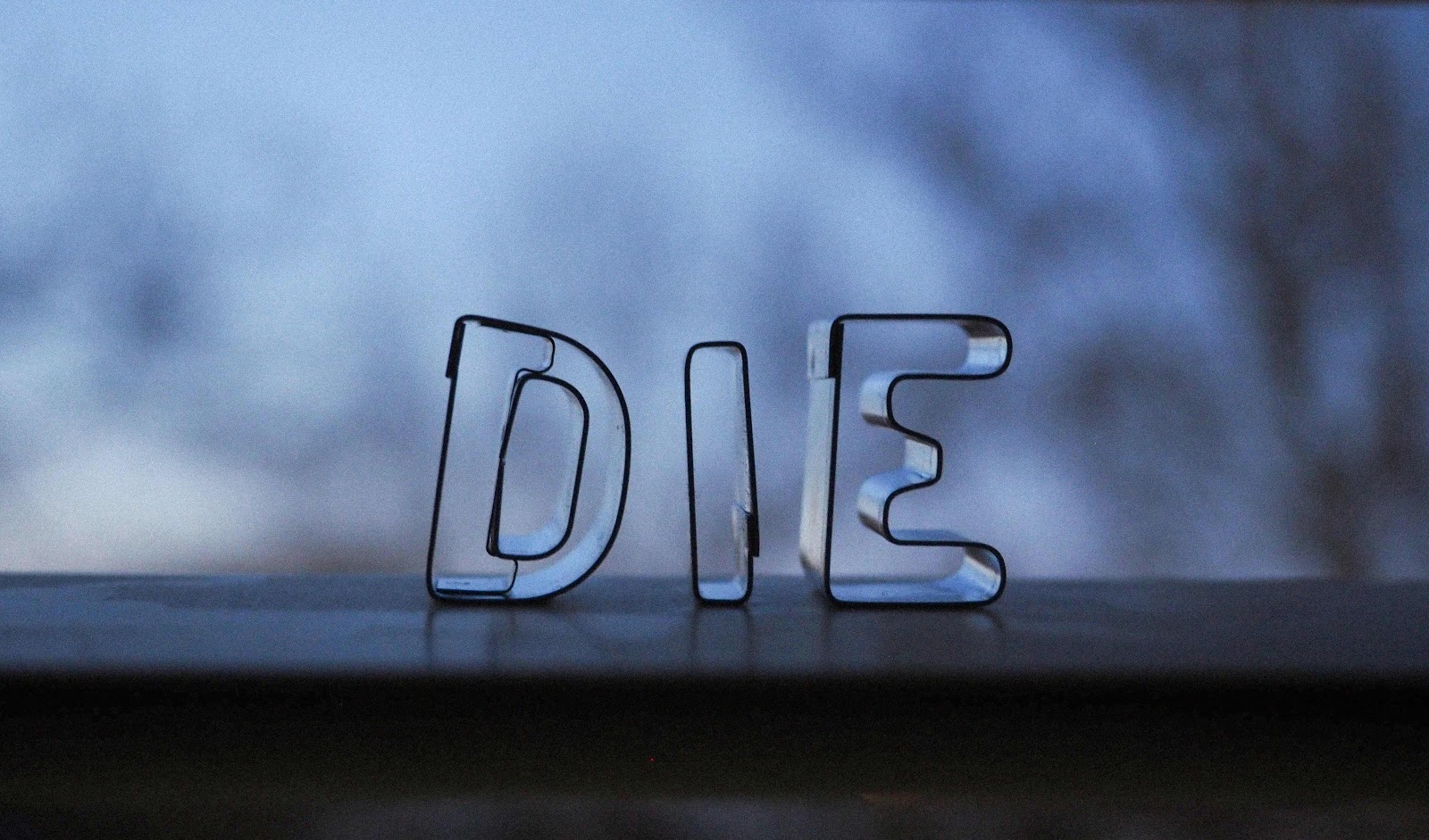
Why must we die?
The Bible states that 'it is appointed unto men once to die'. This most obvious of facts is among the most distressing things that we human beings face. I have a friend who committed suicide just before Christmas about eleven years ago. Why - I can speculate but I do not really know. One my friends in Liverpool then found that her partner's nephew has been found dead in his flat. Death comes to us all but why?
Saturday, February 14, 2026
Through the Bible in 66 Days - Ezra
The Book of Ezra is a story of return, restoration, and renewal. This story begins with broken people in a foreign land and ends with a restored people gathered again around the Word of God. But more than that, it is a story that whispers the gospel. It shows us that God does not abandon His people, even when they have wandered far. He moves history, stirs hearts, and rebuilds lives. Ezra is not simply ancient history; it is a portrait of the God who still saves.
The book opens with a remarkable declaration from Cyrus, king of Persia. After seventy years of exile, God moves the heart of a pagan ruler to send His people home. Ezra wants us to see that this is not a political coincidence but divine compassion. The Lord “stirred up the spirit of Cyrus” (Ezra 1:1). The gospel begins here: salvation is always God’s initiative. As Paul writes, “While we were yet sinners, Christ died for us” (Romans 5:8). God acts first. God moves first. God rescues first.
The returning exiles are a small, fragile remnant. They are not impressive. They are not powerful. They are simply people who have been shown mercy. And that is the gospel again. God does not save the strong; He saves the needy. He does not gather the self‑sufficient; He gathers the broken. The returning Jews remind us of the words of the Lord Jesus: “Blessed are the poor in spirit, for theirs is the kingdom of heaven” (Matthew 5:3).
When the people return to Jerusalem, the first thing they rebuild is not the city walls, nor their homes, nor their economy. They rebuild the altar (Ezra 3:2). Before anything else, they restore worship. They know that their greatest need is not safety or prosperity but reconciliation with God. The gospel tells the same story. Our deepest need is not a better life but a new life. Not self‑improvement but forgiveness. Not a fresh start but a new heart. And that comes only through the sacrifice of Christ, the true altar. Hebrews reminds us that “we have an altar” (Hebrews 13:10)—a place where the perfect sacrifice of Jesus brings us near to God.
After the altar comes the temple foundation. When it is laid, the younger generation shouts for joy, but the older generation weeps (Ezra 3:12). They remember the former glory. They see how far they have fallen. Yet God accepts their mixed emotions. He is patient with their weakness. The gospel shines through again: God meets us where we are, not where we wish we were. Christ does not wait for us to be strong; He comes to us in our frailty. “A bruised reed shall he not break” (Matthew 12:20).
But as soon as the work begins, opposition arises. Enemies discourage, accuse, and intimidate the builders. For years, the work stops. Ezra wants us to understand that God’s work is always contested. The gospel is not a smooth path; it is a narrow one. Yet God is faithful. In His time, He raises up prophets—Haggai and Zechariah—to speak His Word and strengthen His people. And the work begins again. This is the gospel pattern: God sustains what He starts. “He who began a good work in you will perform it until the day of Jesus Christ” (Philippians 1:6).
Thursday, September 18, 2025
We should never forget!
Thursday, June 12, 2025
What do you think about dying?
The subject of “assisted dying” has been exercising the minds of many people these days, writes Bert Cargill of St Monans Gospel Hall. Truly death and dying are serious subjects, but not just for discussion or decision by others in Parliament, but rather for each of us to prepare for it before it comes our way as it surely must. Death is one of the few certainties associated with life.
Unsurprisingly the Bible has a lot to tell us about death and indeed how to prepare for it. Of course it also tells us a lot about life and how to live it well for however many years we may be given. But uniquely and authoritatively its pages describe to us what comes next, after death. It unveils the beauty and bliss of heaven for all who have chosen Jesus Christ as their saviour from sin. It gives to believers the assurance of being with Him for all eternity freed from all the troubles of this life whatever these were. A Christian’s death is described as “dying in faith”, and “departing to be with Christ which is far better”.
Monday, September 18, 2023
Do you make the same mistakes more than once?
One of the common problems we all have is our weakness to resist temptation. It is the same for every one of us. We often explain it away by saying ‘we are only human’ or ‘it’s my weakness’ or similar phrases. The simple fact is that we are flawed by nature and there are things in life that we find very hard to resist. Having said all that when a person gets saved or becomes a Christian, they are a new creation, 2 Cor. 5. 17. They will still feel the struggle that is caused by temptation, but they now have new life and the Spirit of God to strengthen them and keep them from falling.
Scripture Reading
Let no one say when he is tempted,
‘I am tempted by God’;
for God cannot be tempted by evil,
nor does He Himself tempt anyone
James 1:13
Today’s verse is saying that God does not have a problem with evil. He is not attracted to it. This is best illustrated in the life of the Lord Jesus. When the Devil came to tempt Him, it is stated that there was nothing in Him that responded to his advances, John 14. 30. So simply put God does not struggle with evil not did the Lord Jesus. If only we could say that; but things are so different for us.
We all have a daily battle, see Romans 7, with right and wrong. Some days are worse than others and some things are more of a temptation than others. Resisting thinking wrong things is a problem but once a person is saved it can get more intense as their conscience is keener than before. Thankfully, they have the Holy Spirit to appeal to for help.
In closing do not lose sight of this. God never tempts us to do evil. He may test us at times, but it is never His purpose for us to sin. In fact, he wants us to learn to resist temptation and to be aware of our weaknesses. Submit to God. Resist the Devil and he will flee from you, James writes in chapter 4 verse 7.
Monday, August 14, 2023
Cover - UP (Truth Suppressed)


Cover-UP
Tuesday, August 01, 2023
Money could keep you out of heaven!
All photos courtesy of Unsplash
Suggested Bible Reading for today - Mark 10:1-27
Life is busy, time is money, and there are many questions on my mind. Meet the man who thought money could buy everything!
Friday, July 21, 2023
Are you worrying? There’s an 85% chance that it will never happen.
Statistics say that 85% of what we worry about never happens. Paul, an early Bible writer and Apostle, once wrote a series of exhortations aiming to encourage Christians in Philippi. In the closing comments of the letter he encouraged them to ‘rejoice in the Lord alway,’ Philippians 4. 4. This is something we all need to be reminded about from time to time. When things get on top of us we often forget to see the blessings that we have.
Next, Paul encourages them, in verse 5, to be gentle and mild in their behaviour. This attitude is beautifully expressed in the translation of the word ‘moderation’ as ‘sweet reasonableness’. To emphasis how important it is to live in this way Paul reminds his readers that the ‘Lord is at hand’. This could mean that the Lord is near (in other words they can be confident that He is with them) or that the Lord’s coming is near (Jesus will come again as He promised). Both statements are true and should affect how we live.
Paul then warns about being anxious and not trusting the Lord. It is so easy to forget that the One who upholds the universe, Col.1.17, is the same One who cares for us, 1. Pet. 5. 7. There should not really be any issues that we are not prepared to bring to Him and to leave in His hands.
The antidote to worry is prayer. We should pray remembering the greatness of God. We should pray asking Him for help and direction with our problems and we should pray with a grateful heart of appreciation for who God is and what He has done.
We should be specific about our problems when we talk to God as He is interested in every issue that we face. These prayers may be one second prayers, like Nehemiah in the Bible, Neh. 2. 4-5, or they might be more detailed accounts of the issues that we face in life.
All of this will be very strange to you if don’t yet know God personally in your life. Why would you talk to someone you don’t know? The Bible makes it clear that sin separates us from God, Isa. 59. 2, but that if we ‘repent and believe the gospel,’ Mark 1. 15, we can have peace with God through our Lord Jesus Christ, Rom 5. 1.
As you pray you will know the peace of God despite not necessarily knowing the answers.
Five hundred years ago, Michel de Montaigne said: “My life has been filled with terrible misfortune; most of which never happened”. Many agree wholeheartedly that we should pray when we are in a state of relative calm but we often feel that we fail bitterly when the pressure is on and we are at our wits end.
Friday, October 21, 2022
Death - Can you really face it with hope?

Wednesday, June 08, 2022
Sought and Found
SOUGHT AND FOUND
Friday, May 06, 2022
Why do we die?
The Bible states that 'it is appointed unto men once to die'. This most obvious of facts is among the most distressing things that we human beings face. I have a friend who committed suicide just before Christmas about ten years ago - why I can guess but I do not really know. Shortly after that one of my contacts in Liverpool found that her partner's nephew has been found dead in his flat.
Death comes to us all but why?
The Bible tells us why. It is because of sin.
The Bible states that we die because we were born into a fallen race. The first man, Adam, brought 'sin into the world and death by sin'.
We also are all in the habit of sinning and the Bible states 'sin, when it is finished bringeth forth death'. We all sin, fail, hurt, lie, disobey etc, and therefore the moral and physical result is death.
But Jesus said 'I am come that they might have life'.
How can that be true? We all still die! That is true physically but when a person comes to Jesus, by confessing our sin and asks him for forgiveness, they receive eternal life. The Bible says 'He that hath the Son hath life'. God promises in his word, The Bible, that 'he that cometh to me I will no wise cast out'. The Lord Jesus said 'come unto me, all ye that labour and are heavy laden, and I will give you rest'.
This is actually only possible because 'Christ Jesus came into the world to save sinners'. The Bible puts it like this 'The Father (God) sent the Son (Jesus) to be the Saviour of the world'.
Amazing! God intervened to solve the human tragedy of death but His only course of action legally was for someone else to die in my place. The only person who qualified was Jesus. His death was voluntary because death had no claim on him, He could not sin, and did not, which is why death had no claim on him. The Lord Jesus willingly died to save me from eternal death in Hell and the Lake of Fire.
What about you will trust the one who can deliver from the 'fear of death'?
Tuesday, May 25, 2021
A gift you can’t buy
Friday, January 22, 2021
Death or Life?
All photographs courtesy of Unsplash
For weeks now we watched the statistics about coronavirus deaths and infections mounting up. They are terrible to think about, and we long to hear of the numbers reducing and eventually disappearing. Worldwide, it is hard to take it all in, and what the eventual totals will be is hard to imagine.
The authorities need the statistics to map out the progress of the disease, and from their viewpoint, it’s the numbers that matter. But behind the numbers, there are mountains of grief because each one in that total was someone’s close relative, someone’s dear friend, a life cut short unexpectedly.
Wednesday, November 02, 2016
The First Words on Radio
Thursday, October 27, 2016
Tragedies - who is ultimately to blame?
Some blamed Disney for not posting signs warning about alligators in the water. Others were quick to blame the parents. As with the boy who fell into a gorilla pit in Cincinnati, people on social media lambasted the mother and father who allowed their son to play in the water.
Why do we feel such a need to assign blame when tragedy strikes?
According to the United Nations, 437,000 people around the world were murdered in 2012 (their most recent report). However, National Geographic reports that 725,000 people die every year from diseases transmitted by mosquitoes. Freshwater snails transmit schistosomiasis, which kills between 20,000 and 200,000 a year. Annually, snakes kill 94,000 to 125,000; scorpions kill 3,250; sharks kill six people. And there's no one to accuse for any of these tragedies.
It's human nature to blame others so we can maintain the illusion of safety for ourselves. I can say that I wouldn't have allowed my children into the Disney lagoon, but how many other times did I unknowingly put them at risk?
Obviously we should prevent every tragedy we can. But we should also admit that much of life is beyond our control:
• "You do not know what tomorrow will bring. What is your life? For you are a mist that appears for a little time and then vanishes", James 4:14.
• "Do not boast about tomorrow, for you do not know what a day may bring",
Proverbs 27:1.
• "Do not be anxious about tomorrow, for tomorrow will be anxious for itself. Sufficient for the day is its own trouble", Matthew 6:34.
The same law of gravity that enables us to walk causes us harm when we fall. Alligators are essential to the Florida ecosystem but dangerous to humans. We cannot have natural laws without the consequences of these laws.
So control what you can and trust your Father for what you cannot. Make sure that the biggest danger in life, death, is covered so that when the unexpected happens you are safe.
Believe in the Lord Jesus Christ and you will be saved, Acts 16:31.
Friday, October 21, 2016
50 Years on - Aberfan is still remembered!
![]() |
| By John Thorn, CC BY-SA 2.0, https://commons.wikimedia.org/w/index.php?curid=9146083 |
![]() |
| By John Thorn, CC BY-SA 2.0, https://commons.wikimedia.org/w/index.php?curid=9146083 |