Tuesday, October 31, 2023

The most remarkable book in the world.


All photos used by courtesy of Unsplash 


The Bible is a remarkable book, we can even say totally unique.  It is divided into Old Testament, completed four hundred years before the birth of Jesus and the New Testament, completed by the end of the first century AD. The Old Testament has many strands of predictive prophecy and the most important of those predictions apply to the Lord Jesus.  It has been worked our that there are sixty prophecies focused  upon various aspects of Jesus including His birth, death, burial and resurrection. This is an amazing number and they came true in the minutest detail.
SHARE:

Friday, October 27, 2023

David & Goliath - Lucozade Advertising


Lucozade Energy goes back to biblical times by purporting to tell the sequel to the David and Goliath epic.
The campaign by Grey London puts the rift between the young shepherd and his adversary in a more modern context with a humorous film and hand-painted oil poster. In the ad, David wakes up feeling groggy and is reminded that he picked a fight with Goliath by calling him a giant. When Goliath comes to take his revenge, the shepherd boy takes a swig of Lucozade Energy before grabbing a sling and venturing out to conquer his colossal foe. The work was written by Jay Marlow and Rob Greaves, art directed by Henrik Ridderheim and Sam Daly, and directed by Harold Einstein through Outsider. 
SHARE:

Thursday, October 26, 2023

17 scientists who believe in God (there are more)


All photos are courtesy of Unsplash 

Being a Christian is not necessarily an easy option. Believe it or not it takes backbone and courage to stick to what you believe when the majority of people disagree with you. It would often be easier to go with the flow and accept the status quo but to be truthful, that would be a betrayal of my conscience.


I often give public talks in Liverpool City Centre. Street preaching is not socially acceptable but it is legal as long as you don’t cause a breach of the peace or are inflammatory in the language that you use to express yourself. The downside is that you are exposing yourself to ridicule. If you take the liberty of expressing your views in public you have to be willing to listen to what other people have to say and be prepared to defend your viewpoint.


There is always a courteous way to present your point of view but it is important to be honest and above board so that people can trust what you say. In the holy scriptures, the apostle Paul was very keen to make it clear that he was never deceitful or crafty in the way he communicated the message of the gospel. This is what he says - ‘But we have renounced disgraceful, underhanded ways. We refuse to practice cunning or to tamper with God's word, but by the open statement of the truth we would commend ourselves to everyone's conscience in the sight of God,’ 2 Cor 4. 2.


He had made it his practice to be open and clear when he preached about Jesus. If the message of the Bible (and the gospel of Jesus Christ) is true (and I believe the facts points to this being the case) then it can be scrutinised and investigated honesty.

SHARE:

Wednesday, October 25, 2023

What do you do with your time


All photos courtesy of Unsplash

It is nice to take time to relax, have a coffee and chat. It is important at times to sit down, catch up and do a bit of planning. We all do it from time to time but probably not often enough.

Relevant questions we should sit down and ask are: 
  1. What have I been doing with my time? 
  2. Could I have used it more effectively? 
  3. What are my plans for the future? 
  4. Am I achieving what I want to achieve?
  5. If not what plans and actions do I need to take to change things effectively? 
Planning is so important in every area of life! 

As someone once said - if you don't know where you are going, you'll definitely arrive. Planning, organising, implementing and reviewing are all good organisational skills.

You might be very successful in work-life but I want to ask you how your personal life is? Sometimes we need to clean and tidy up certain parts of our lives. What about reviewing your life so far and planning for the future? Are you prepared to be as careful about the personal issues of your life and your soul as you are in work life? Some of you will be perfectionists when it comes to your business, your personal hygiene, your financial affairs but how is it with you soul and your spiritual state before God?

Be careful as you start this process. 

Remember that the Bible speaks the truth and warns of the following:

Jeremiah 17. 9 - 'the heart is deceitful above all things, and desperately wicked: who can know it'.

Proverbs 16. 25 - 'there is a way that seems right unto a man, but the end thereof are the ways of death'. 

These verses mean that you cannot trust your instincts, you must learn to trust, believe and obey what God says in His revelation of truth, i.e. the Bible.

The Bible often states the obvious because as humans we often choose to ignore the obvious:

Ecclesiastes 3. 1 & 2 - 'to everything there is a season, and a time to every purpose under heaven: a time to be born, and a time to die'.

Hebrews 9. 27 & 28 - 'and as it is appointed unto men (humans) once to die, but after this the judgement: so Christ was once offered to bear the sins of many'. 

John 8.24 - (the Lord Jesus is speaking) 'I said therefore unto you, that you shall die in your sins: for if you believe not that I am he (the promised one/Son of God), you shall die in your sins'. 

My final quotation is simple yet direct advice from the Bible. 

It is based on the assumption that the hearer accepts that they are guilty of sin, in danger of God's judgment and aware of their inability to save themselves.

Acts 16. 31 - 'Believe on The Lord Jesus Christ, and you shall be saved'. 

Plan for life and enjoy God's salvation now and the guarantee of a home in heaven on the other side of death

OR

Ignore the truth and face the eternal judgement of God in Hell and the Lake of Fire.

Please plan wisely.


To access podcasts and videos explaining the good news of salvation through faith in Jesus Christ visit www.seekthetruth.org.uk


This site will give you access to Bible Teaching Audio's and Video's as well.


All posts have the aim of pointing people to Jesus Christ as Lord and Saviour or to aid Christian growth and development.


SHARE:

Tuesday, October 24, 2023

Are you satisfied?


All photos courtesy of Unsplash


Within the heart of every human being there is a strong desire for something that seems so elusive - true and lasting satisfaction. Satisfaction is rarely found because anything that we enjoy only lasts for a limited period of time. This covers almost all of the things we enjoy whether it is a delicious meal, a holiday away or good times with friends and family, there is a degree of truth in the saying, “all good things must come to an end.” 


The Bible seems to back this up, it tells of a man called Moses, a godly man who initially lived in Ancient Egypt who ultimately led the Children of Israel out of slavery. The New Testament records in Hebrews 11:25 that he “choose rather to suffer affliction with the people of God, than to enjoy the pleasures of sin for a season.” The Bible says that the things that we enjoy on earth, whether they are good things or sinful things, they only last for a season. King Solomon, probably the richest man of his time understood this too, he said in Ecclesiastes 1:8: “The eye never has enough of seeing, nor the ear has its fill of hearing”. That is to say, we never have enough stimulus to keep our natural senses interested. The Lord Jesus said that it was a foolish thing to try and find satisfaction in the material things that are round about us, Luke 12:15 says, “A man’s life does not consist in the abundance of things the things which he possesses.” 


When we come to John 4 however, we read a fascinating conversation between the Lord Jesus and a woman of Samaria. The Lord Jesus reveals in v18 that this woman had tried to find satisfaction and purpose in earthly relationships, the evidence indicating that her efforts had failed by the fact she had had five husbands and she was now onto her sixth! The Lord Jesus then reveals why she wasn’t satisfied, she was not a true worshipper of God. She had tried to source her satisfaction and purpose in creation rather than in the Creator. The Lord Jesus says to the person who sources their purpose in God, “I am come that they might have life, and they might have it more abundantly”. There is no other source of true and lasting satisfaction than becoming a worshipper of the true God. Turn from those fleeting sins and place your faith in the Lord Jesus and become a worshipper of the one, true God today.

SHARE:

Friday, October 20, 2023

Who is Jesus?


❓❓❓❓❓❓❓❓❓❓❓❓❓❓❓❓❓❓❓❓❓❓❓❓❓❓❓❓❓❓❓


There are many questions that circle around the world today. Some are important, like, “How will the Russia-Ukraine war end?”; others are far less important, like, “Which team will win the World Cup?”. While all these questions have relative importance for time, questions about God and eternity are different. One of the most important questions we must all give an accurate answer to is this question, “Who is Jesus?”

Although many opinions have been traded to and fro about this question, the Bible is the only source that carries any weight of certainty. The Bible tells us very clearly who He was and is. It also tells us that correctly identifying Him is vital for us to have a right relationship with God (John 8:24). The Bible clearly teaches that Jesus is God and was always God from before time began. It says in John 1:1, “In the beginning was the Word, and the Word was with God, and the Word was God.” 

Yet, the verse below tells us that this mighty Being became a man and walked in His creation and among His own creatures. He was a real man, born in Bethlehem to a real woman, the Virgin Mary. He was raised in Nazareth, a town you can visit in modern-day Israel today. There is no doubt about the reality of this man, Jesus of Nazareth.

A question that, unfortunately, many fail to ask is this: “Why was He here?” Considering that an eternal Person walked in Israel 2,000 years ago is amazing. However, without a clear purpose for Him being here, His presence would have demonstrated nothing other than that we are hopelessly weak and sinful.

But praise God, He did have a purpose in coming down here! Jesus said: “For the Son of man is come to seek and to save that which was lost” (Luke 19:10). The Lord Jesus came down to Earth to die on the cross for our sins. He took the punishment we deserved upon Himself so He could bring us to God. That is why is He came!

So today, take the person of the Lord Jesus Christ, who is both God and man as your own Lord and Saviour.


Written by a Guest Blogger


SHARE:

Thursday, October 19, 2023

RHS Bridgewater

I visited RHS Bridgewater near Manchester on Monday this week. It was beautiful. Here are some (unedited) pictures. 

Have a good day,

Stephen 


SHARE:

Wednesday, October 18, 2023

An Artist's Picture of Peace


There once was a king who offered a prize to the artist who could paint the best picture of peace. Many artists tried. The king looked at all the pictures, but there were only two he really liked and he had to choose between them. One picture was of a calm lake. The lake was a perfect mirror of peaceful towering mountains which were all around it. Overhead was a blue sky with fluffy white clouds. All who saw this picture thought that it was a perfect picture of peace.
SHARE:

Friday, October 13, 2023

Back in Liverpool


We arrived back on a Tuesday evening around 2100. It was a long journey but we made it. The flight from Kiev to Frankfurt was delayed by 30 minutes which had a knock on effect. 

The journey from arrival to departure in Frankfurt Airport was pressured and tense. This was the same as our outward bound journey. If you are training for a 5k run transiting through Frankfurt International Airport is good practice!
SHARE:

Wednesday, October 11, 2023

Liverpool to London - 2 Hours 13 Minutes


It is seven years since I travelled from Liverpool to London for a week of gospel meetings and outreach. 

The journey was very easy. My wife drove me to Lime Street Station in the centre of Liverpool. I got on the train, found my seat and settled down for a couple of hours of emails, reading, phone calls, etc. At precisely 1400, we pulled into Euston in central London. 

Once I was out of the train, I made my way to the underground. I moved with the crowds in and out of underground trains until I was at Cannon Street Station. I then rose from the 'bowels of the earth' to stand in the bright light of the day and found myself facing platform 3, from which my overland train would leave. The Abbey Wood area of London was my ultimate destination. I arrived there safe and sound. The journey was over. 


At each stage, I was comfortable and dry, could access food and had the use of a loo. I can't complain as the journey was easy. 

Let me tell you about someone else who made a journey under very different circumstances. His name is Jesus. 

He left heaven to come to earth. The world he left was so magnificent I cannot find words to describe it. Revelation 21, in the Bible, gives us a taste of what it must have been like. It is described as having no death, 'neither sorrow, nor crying'. It is an amazing place that reflects the glory of God. 

Jesus left that place willingly to come to earth to deal with our sins. The apostle Paul writes in Philippians 2:7 about the journey of the Son of God - 'but made himself of no reputation, and took upon him the form of a servant, and was made in the likeness of men'. 

If you have turned to Philippians 2, read on - 'And being found in fashion as a man, he humbled himself, and became obedient unto death, even the death of the cross'. My journey was nothing compared to this. 

The Lord Jesus Christ came to earth, took manhood and endured the death of the cross so that we could have forgiveness, salvation and be right with God. What humility and grace. 

But that's not the end; Philippians continues: 'Wherefore God also hath highly exalted him, and given him a name which is above every name: That at the name of Jesus every knee should bow, of things in heaven, and things in earth, and things under the earth; And that every tongue should confess that Jesus Christ is Lord, to the glory of God the Father'.

Check this out: the ultimate purpose of the journey of Christ to earth was to bring you to God. May you discover the truth in Christ today. 

Visit www.seekthetruth.org.uk today. 


SHARE:

Tuesday, October 10, 2023

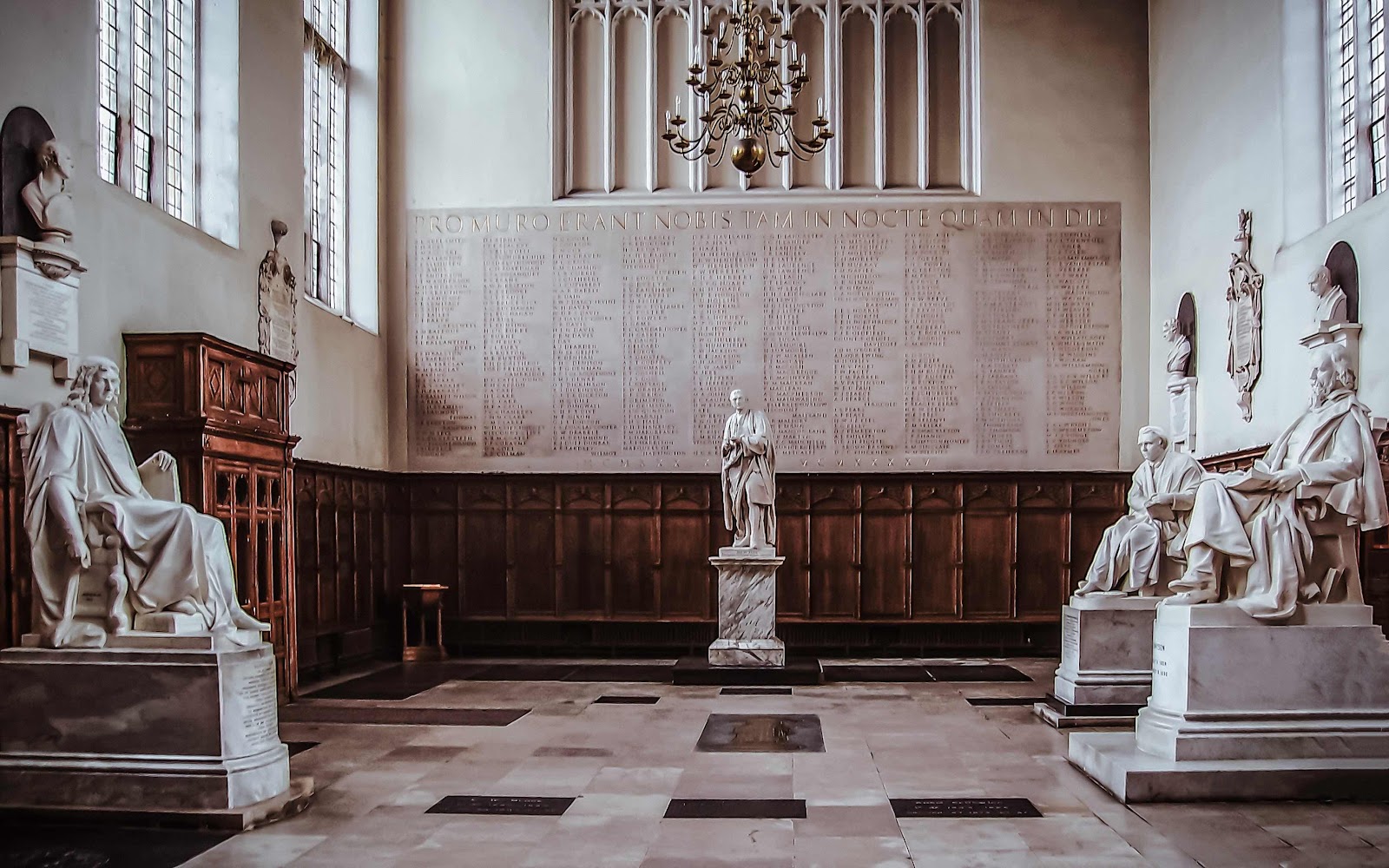
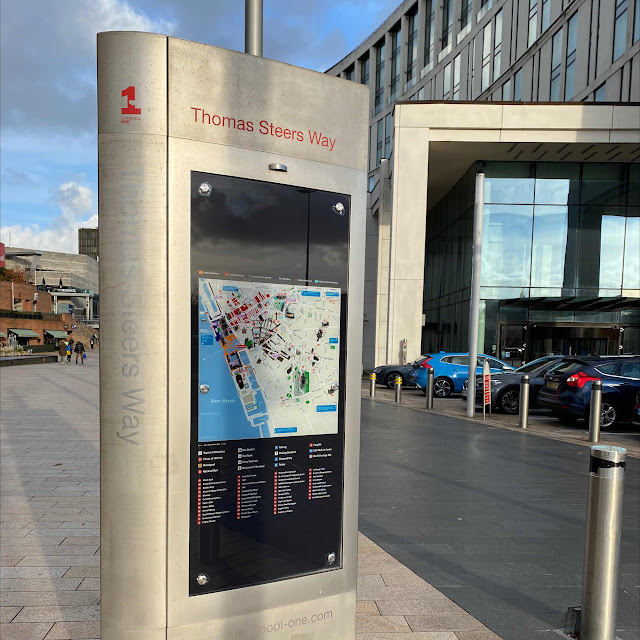
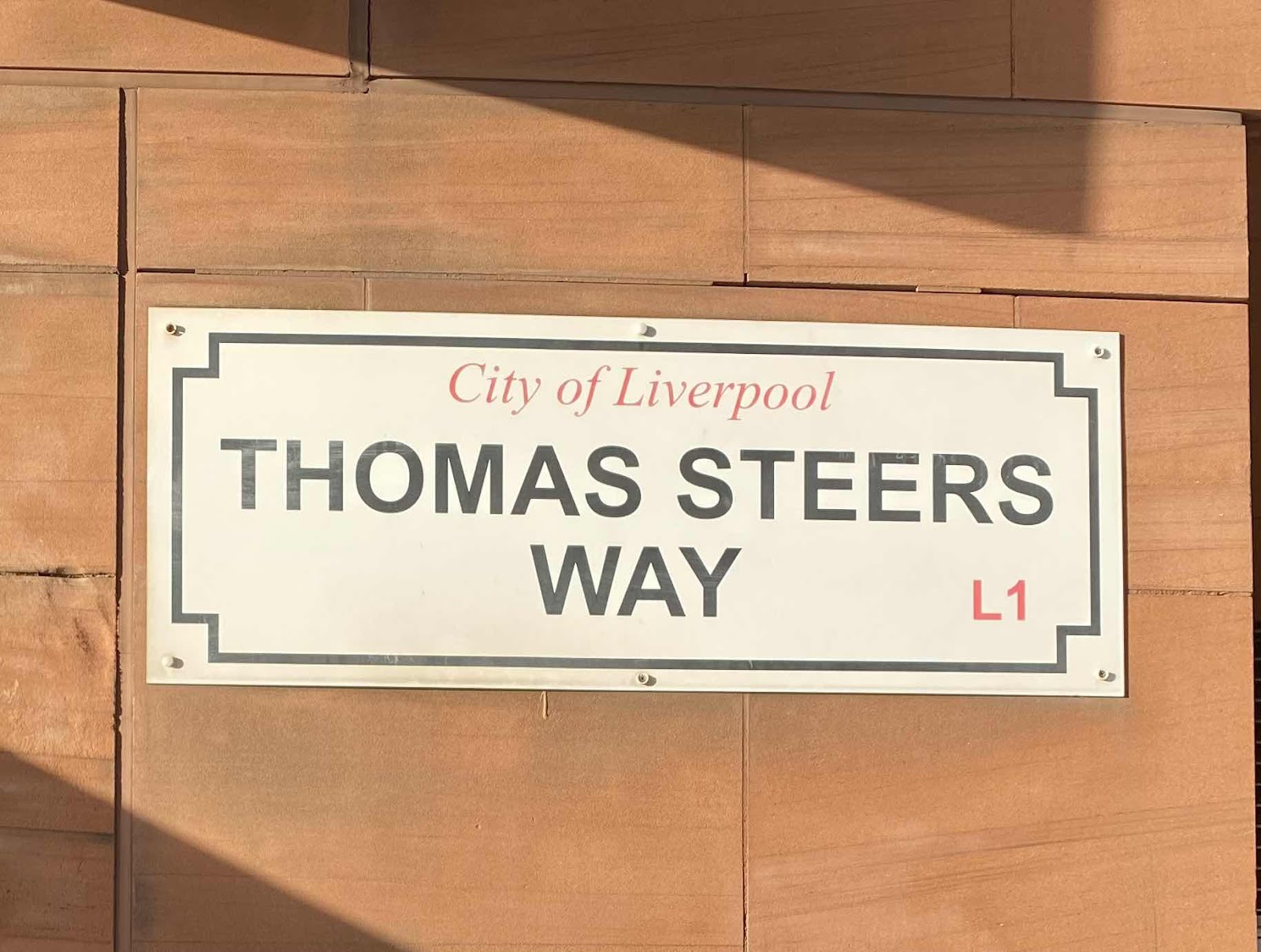
Thomas Steers of Liverpool


Photos courtesy of GJA Ltd

There have been some outstanding people in the history of our nation and they made such a significant contribution or cities and countryside that we continue to benefit from their design and genius. Thomas Steers is reputed to have been such a man.  

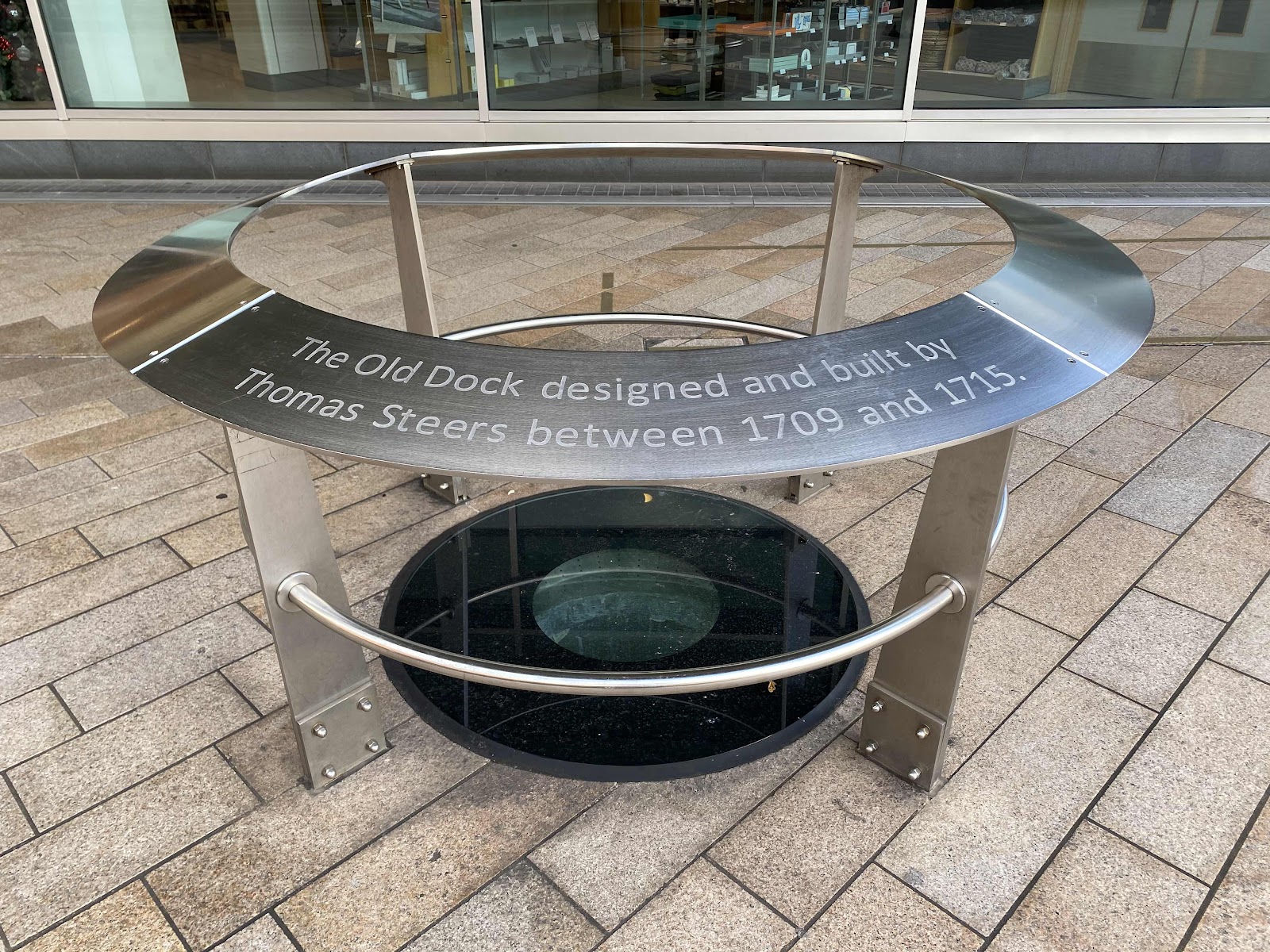
He was England's first major civil engineer and built many canals, the world's first commercial wet dock, the Old Dock at Liverpool, St. George's Church at the site of Liverpool Castle, and a theatre. He designed Salthouse Dock in Liverpool, which was completed by Henry Berry after Steers' death.

Here is a little more detail of his life which has been collated from information found on Wikipedia (this info is not guaranteed to be correct but it gives a fair view of Thomas Steer’s achievements). 

Thomas Steers was born in 1672, probably at Deptford or Rotherhithe. He is thought to have had a good education, in view of his obvious skills in mathematics, and he joined the army during his teenage years. He was part of William of Orange's4th Regiment of Foot (The King's Own), which fought at the Battle of the Boyne in 1690, and subsequently campaigned in the Low Countries against the French until the Peace of Namur was signed in 1697. He probably learned about hydraulics at this time, a skill that served him well in later years. In 1698 or 1699 he married Henrietta Maria Barber, and her father gave them a house in Queen Street, Rotherhithe.[1]

At the time, the Great Dock at Rotherhithe was being constructed, on land leased from Elizabeth Howland, which formed part of the Howland Estate. There is no record of Steers's direct involvement in the project, although he produced a survey of the completed docks in 1707, and seems to have been employed as a surveyor for the estate. A lease agreement at the time described him as a house-carpenter.[2]

In 1708, plans for a dock at Liverpool, similar to that at Rotherhithe, were formulated, and had been drawn up by George Sorocold and Henry Huss by mid-1709. Neither man accepted the offer to act as engineer for the construction of the docks. On 17 May 1710, the Town Council learned that Steers was in Liverpool, and had his own designs for the project, which involved reclaiming land from the Pool, rather than building the dock of existing land. The precise reason for Steers' arrival in Liverpool is not clear, but may well be connected to the rise to power of James Stanley, who became mayor in 1707 and Lord Lieutenant of Lancashire until 1710, and who had noticed Steers in Flanders, while commanding the 16th Regiment of Foot. Steers' design was accepted, and the construction was overseen by him, assisted by William Braddock. He also contracted for some of the excavation work, and although it was incomplete at the time, the dock opened for shipping in 1715. A tidal basin and three graving docks or dry docks were authorised by another Act of Parliament obtained in 1717, and during their construction, various alterations and extensions were made to the original dock. The works were completed in 1721. Since 1717, Steers had also acted at Dock Master, for which he was paid £50 per year, and Braddock had been the Water Bailiff. From 1724, he took over Braddock's role as well, though was no longer paid, as this post included a number of perks and fees.[3]

Concurrently with his work on the Liverpool Docks, Steers was active in other projects. He surveyed the rivers Irwell and Mersey from Bank Quay at Warrington to Manchester in 1712. An Act of Parliament authorizing the Mersey and Irwell Navigation was passed in 1721 and the work, which included eight locks in a distance of 15 miles (24 km) to overcome a rise of 52 feet (16 m), was completed about 1725. It is generally believed he was the engineer.[4] The authorising Act named him as one of the Undertakers.

He also made surveys for the Douglas Navigationwhich connected the Ribble estuary to Wigan in 1712, and was again named as an Undertaker in the Act of Parliament obtained in 1720. He built a lock and a bridge, straightened a section of the river, and started the construction of a tidal lock, but his partner William Squire, who was raising finance for the scheme in London, became involved in the South Sea Bubble, and appears to have lost most of the money he raised.[3] With the money gone, Steers moved on. The navigation was eventually completed in 1742, and carried coal from Wigan to Liverpool and onwards to Ireland by ship.[5]

His most significant navigation achievement was the Newry Canal, in Ireland, which was the first summit-level canal in the British Isles. The promoters asked him to act as engineer for the scheme in 1729, but then declined to pay him the fees he requested, and so the initial construction work was overseen by Edward Lovett Pearce. Pearce died in 1734, and his assistant Richard Castle took over the role. Steers returned to the project in 1736, when he conducted a survey of the existing work. Castle was sacked in December 1736, and Steers then supervised construction until 1741, working on a part-time basis. The work took longer than expected,[6] and the canal finally opened in the spring of 1742. The 19.4 miles (31.2 km) of canal included 13 locks, and ran from Newry, where it connected to Carlingford Lough and the sea by a narrow channel, which was made into a ship canal in the 1760s. At its northern end it ran to Portadown where it joined the Upper Bann River to reach Lough Neagh. It was built to transport coal from the Tyrone collieries to Dublin.[7]

In order to build locks with a larger fall than was possible with conventional gate paddles, Steers built two of the locks with sluices and ground paddles, which fed water into the bottom of the lock through the side walls. Water supply for the summit level was taken from local streams, supplemented by water from Lough Shark, which was used as a reservoir. As a whole, the work was not well executed, and the innovative locks had to be rebuilt soon after 1750.[6]


Besides his work on docks and canals, Steers was involved with a wide range of other projects. Even the Mersey and Irwell Navigation and the Douglas Navigation were promoted not just to make carriage of existing trade easier, but to generate new trade which would contribute to the prosperity of the region. Jointly with Sir Cleave Moore and Sir Thomas Johnson, he promoted the Liverpool Waterworks in 1720. He set up a smithy making anchors near the Liverpool Docks, and was a partner in the Dove, a ship which traded between Liverpool and the West Indies.

He appears to have been a keen amateur architect (before that term was in popular parlance) and as well as the work on Liverpool Old Dock, executed alongside chief mason Edward Litherland, is paid in the accounts of The Blue Coat School (1715) once again with Litherland, "a new Street, called Chorley Street or Squire's Garden" (1720), St. George's Church (1725) (Litherland cited as mason) and what would become Salt House Dock once again winning the contract along regular collaborator Litherland. Their working relationship ended with Litherland's death in 1739. His best known architectural work was that of "Seel's House" on Hanover Street, Liverpool which would later become a bank before making way for the Liverpool One Tesco supermarket. It is highly likely that he designed a number of other buildings in Liverpool, no longer extant, including buildings on Paradise Street.

In 1725 he became a commissioner for the turnpike road from Prescot to Liverpool, and drew up plans for St George's Church on the site of the Liverpool Castle. He subsequently was responsible for the construction of its foundations and steeple. He built houses for poor and destitute seamen in 1739, and opened the Old Ropery Theatre in the following year.[8]

Steers became a Freeman of the town of Liverpool in 1713, and served on the town council in 1717. In 1719 and 1722, he was a Town Bailiff, became mayor of Liverpool from 1739 to 1740, and was an Out-burgess in Wigan in 1746. He was responsible for the fortification of Liverpool during the Jacobite rising of 1745. 

Steers' first marriage to Henrietta Maria ended in 1717 with her death. Of their seven children, four died in childhood, while the other three are thought to have become seamen, and all had died by 1732. In 1719 he married Ann Tibington, who came from Rotherhithe and was the widow of a seaman. She had a son called John, and they had four children of their own, two of which died in childhood. He died in 1750, and was buried in the grounds of St Peter's Church. His only surviving son, Spencer, carried on his anchor making business after his death.[9]

There was also a Thomas Steers, lime burner of Greenwich (probably the owner and/or digger of "Jack Cade's Cavern" and of a nearby sand mine) who was born about this time and in the right area, but who was probably not the same person. Other Steers were involved in pottery. This hints at an extended Steers family with interests in kilns and building mortar.

Despite his considerable contribution to civil engineering, his death went almost unnoticed, although the civil engineer John Smeaton, writing to the Calder and Hebble Navigation in 1757, noted that Steers was an esteemed man of character and ability in his profession. He built the first successful commercial dock in the world, and the United Kingdom's first summit level canal. He trained his assistants well, as several went on to have illustrious careers of their own. Above all, he understood his work in its wider social context, being active in the politics and trade of Liverpool, and understanding the need for the town to be well-connected to its hinterland. His work paved the way for Liverpool to become one of the world's greatest ports, and was a contributory factor in the industrial revolution which began shortly after his death.[10]

I find the history and story of people’s lives very interesting. The final comment that ‘his death went unnoticed’ is quite sobering. It is possible to live your life well, to do great things, and to make a significant impact on your world and yet to die unrecognized and unnoticed. I must clarify that this is ‘unnoticed’ by the world for the Bible teaches that you will never die unnoticed by God. 

From the moment of your birth to the date of your death your life is significant. There are numerous statements and verses in the Bible that make this clear. 

Starting at the beginning of the Bible we read that humans were made in the image of God - Genesis 1. 26.

In the middle of the Bible, David the great poet king states that God knew him individually before he was born (Psalm 22. 9,10) and was aware of the highs and lows of his life (Psalm 139).

In the New Testament, there are also men who we learn God had involvement in their lives from before birth (John the Baptist, Luke 1. 5-25, Paul, Gal. 1. 15). The interesting fact about Saul of Tarsus who eventually became a Christian (and became known as Paul the Apostle) is that he was anti-Jesus and anti-Christianity until God personally intervened in his life (Acts 9, 22, 26).

In light of these facts, I suggest that we need to focus on timeless truths and do things with our lives that will not just outlive us but be of eternal value and significance.

This life is temporary and so are the things that you can see around you but there are unseen things that are eternal (2 Cor 4. 18).

Do you have eternal life?

Are you living merely for the ‘here and now’ or for what is timeless and eternal?

Finally, a verse from the Bible that explains how humans receive eternal life from God, their creator.

“For God so loved the world, that He gave His only begotten Son, that whoever believes in Him shall not perish, but have eternal life,” John 3:16 (The Bible - NASB) 



SHARE:

Monday, October 09, 2023

Bringing an amazing message to an amazing city


I live in Liverpool and think that it is an amazing city. One of the reasons I live here is to tell people the amazing message that God loves them despite the sin we all commit. The evidence for this is the fact that Jesus Christ died for us all and rose from the dead on the third day. The crux of the message is the fact that we need to admit (confess) our sin directly to God (not through a third party) and to trust Jesus Christ in his ability to save you for ever. The following extract from the bible recounts when Paul, the great bible preacher, arrives in Athens and preaches the same message I am preaching in Liverpool today. I am praying that you will be blessed for reading this as the people where in Athens long ago.  


Acts 17

New King James Version (NKJV)

Preaching Christ at Thessalonica

17 Now when they had passed through Amphipolis and Apollonia, they came to Thessalonica, where there was a synagogue of the Jews. Then Paul, as his custom was, went in to them, and for three Sabbaths reasoned with them from the Scriptures, explaining and demonstrating that the Christ had to suffer and rise again from the dead, and saying, “This Jesus whom I preach to you is the Christ.” And some of them were persuaded; and a great multitude of the devout Greeks, and not a few of the leading women, joined Paul and Silas.

Assault on Jason’s House

But the Jews who were not persuaded, becoming envious,[a] took some of the evil men from the marketplace, and gathering a mob, set all the city in an uproar and attacked the house of Jason, and sought to bring them out to the people. But when they did not find them, they dragged Jason and some brethren to the rulers of the city, crying out, “These who have turned the world upside down have come here too. Jason has harbored them, and these are all acting contrary to the decrees of Caesar, saying there is another king—Jesus.” And they troubled the crowd and the rulers of the city when they heard these things. So when they had taken security from Jason and the rest, they let them go.

Ministering at Berea

10 Then the brethren immediately sent Paul and Silas away by night to Berea. When they arrived, they went into the synagogue of the Jews. 11 These were more fair-minded than those in Thessalonica, in that they received the word with all readiness, and searched the Scriptures daily to find out whether these things were so. 12 Therefore many of them believed, and also not a few of the Greeks, prominent women as well as men. 13 But when the Jews from Thessalonica learned that the word of God was preached by Paul at Berea, they came there also and stirred up the crowds. 14 Then immediately the brethren sent Paul away, to go to the sea; but both Silas and Timothy remained there. 15 So those who conducted Paul brought him to Athens; and receiving a command for Silas and Timothy to come to him with all speed, they departed.

The Philosophers at Athens

16 Now while Paul waited for them at Athens, his spirit was provoked within him when he saw that the city was given over to idols. 17 Therefore he reasoned in the synagogue with the Jews and with the Gentile worshipers, and in the marketplace daily with those who happened to be there. 18 Then[b] certain Epicurean and Stoic philosophers encountered him. And some said, “What does this babbler want to say?”
Others said, “He seems to be a proclaimer of foreign gods,” because he preached to them Jesus and the resurrection.
19 And they took him and brought him to the Areopagus, saying, “May we know what this new doctrine is of which you speak? 20 For you are bringing some strange things to our ears. Therefore we want to know what these things mean.” 21 For all the Athenians and the foreigners who were there spent their time in nothing else but either to tell or to hear some new thing.

Addressing the Areopagus

22 Then Paul stood in the midst of the Areopagus and said, “Men of Athens, I perceive that in all things you are very religious; 23 for as I was passing through and considering the objects of your worship, I even found an altar with this inscription:
TO THE UNKNOWN GOD.
Therefore, the One whom you worship without knowing, Him I proclaim to you: 24 “God, who made the world and everything in it, since He is Lord of heaven and earth, does not dwell in temples made with hands. 25 Nor is He worshiped with men’s hands, as though He needed anything, since He gives to all life, breath, and all things. 26 And He has made from one blood[c]every nation of men to dwell on all the face of the earth, and has determined their preappointed times and the boundaries of their dwellings, 27 so that they should seek the Lord, in the hope that they might grope for Him and find Him, though He is not far from each one of us; 28 for in Him we live and move and have our being, as also some of your own poets have said, ‘For we are also His offspring.’ 29 Therefore, since we are the offspring of God, we ought not to think that the Divine Nature is like gold or silver or stone, something shaped by art and man’s devising. 30 Truly, these times of ignorance God overlooked, but now commands all men everywhere to repent, 31 because He has appointed a day on which He will judge the world in righteousness by the Man whom He has ordained. He has given assurance of this to all by raising Him from the dead.”
32 And when they heard of the resurrection of the dead, some mocked, while others said, “We will hear you again on this matter.” 33 So Paul departed from among them. 34 However, some men joined him and believed, among them Dionysius the Areopagite, a woman named Damaris, and others with them.

SHARE:
Blogger Template Created by pipdig