Thursday, January 29, 2026

Books


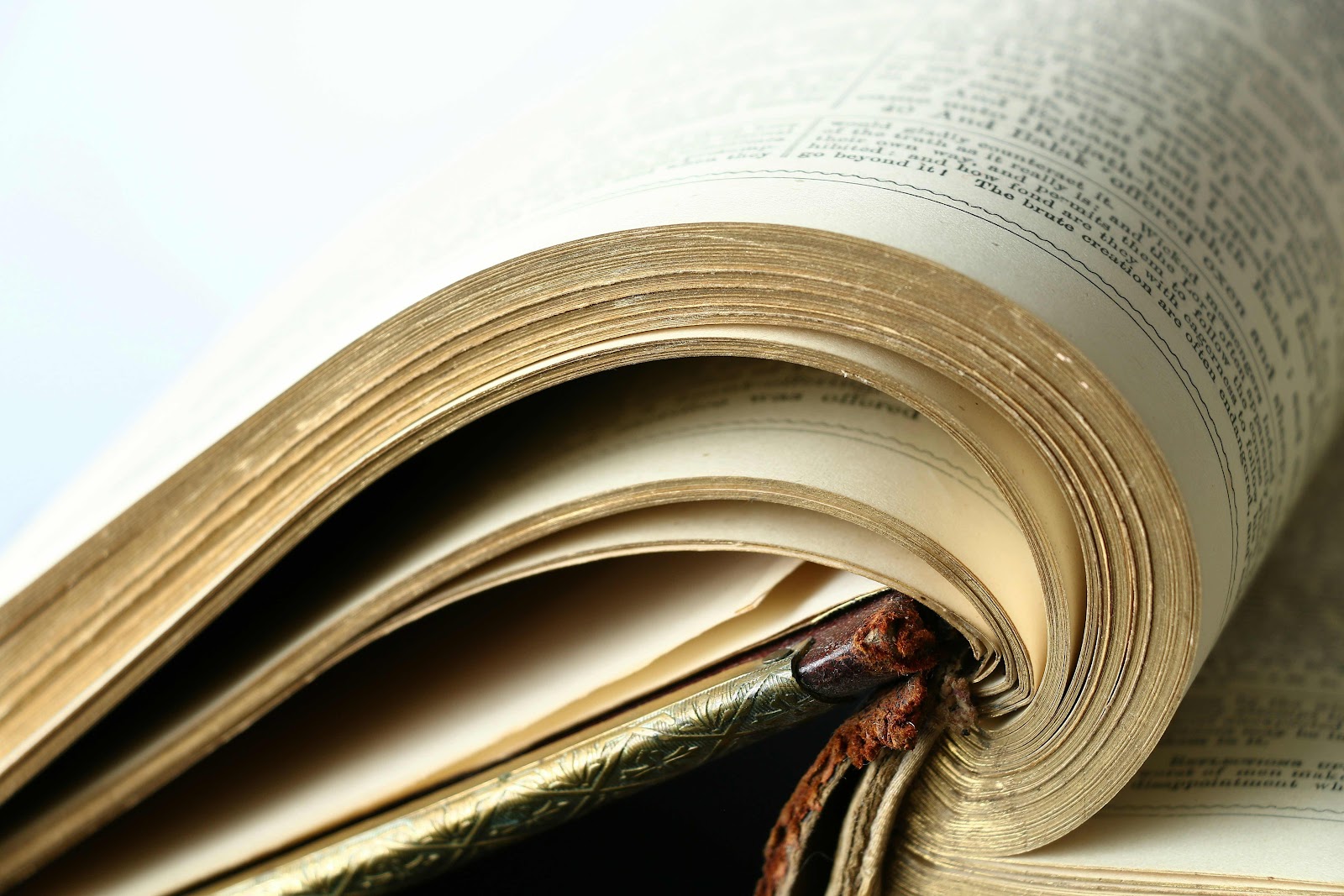
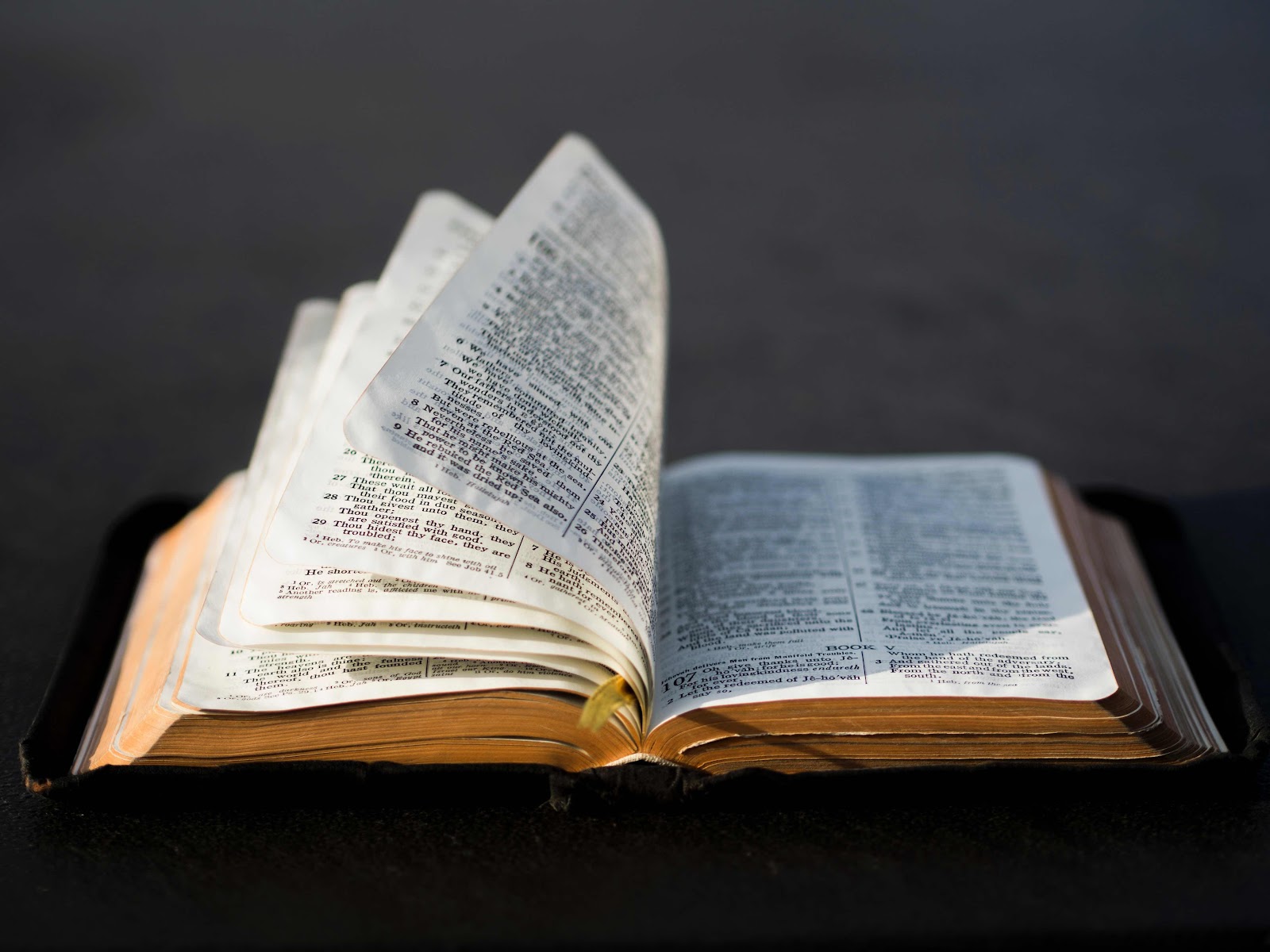
Books have been published and produced for hundreds of years. Some people predicted their demise with the advent of modern technology, such as Kindles and other electronic devices for reading. 

However, as a visit to a bookshop makes clear, books are still being produced in large quantities in hard copy, both hardback and paperback. There are still vast numbers of people who love to hold a book and turn the pages, and many also find looking at a screen a numbing and difficult experience.  

Reading is vital for education and the gaining of information. The Apostle Paul, right up to the end of his life, maintained his reading regime as he asked, in the last letter he wrote addressed to Timothy, that books be forwarded to him and also the parchments (2 Timothy 4.13). The Apostle John, in a statement of hyperbole or exaggeration to make a point, said, "And there are also many other things which Jesus did, the which, if they should be written everyone, I suppose that even the world itself could not contain the books that should be written." (John 21.25). He indicates that we only have a sample in the Gospel accounts of the wonders and miracles performed by Jesus.  
SHARE:

Monday, August 11, 2025

Do you take you ability to read for granted?


All photos courtesy of Storyblocks

In Western culture, we almost take the ability to read for granted! Reading is such a basic requirement for life. 
The fact you understand what I am talking about in this article means that you can read! Essentially, it means that you can translate the squiggles and strokes on the page. If I am incapable of writing well or of expressing my ideas, then you may read the words but have no idea what I'm trying to say. Therefore, reading with understanding is vital. 
SHARE:

Tuesday, May 13, 2025

Wisdom Literature


As anyone who reads this column knows, I love reading the Bible and believe it is the ultimate source of wisdom for every area of life. One section of the Bible comes under the heading of 'wisdom literature'. It starts with the book of Job, where the meaning and purpose of suffering are discussed. It's a thorny problem and one where glib answers are not appropriate. As Job struggles through circumstances that challenge every fibre of his faith, he asks many questions. This is normal and part of working through tough situations in life.


In Job chapter 28, he poses the question - Where can wisdom be found? This is still a relevant question. Look at all the intelligence in our nation. We live in a country with many universities, and over 45% of people in the United Kingdom have some form of post-secondary education, but wisdom often evades us. Ultimate wisdom is found in God and His Son, Jesus Christ. Daniel, one of the outstanding Bible characters, said, 'Blessed be the name of God forever and ever, to whom belong wisdom and might. He changes times and seasons; he removes kings and sets up kings; he gives wisdom to the wise and knowledge to those who have understanding; he reveals deep and hidden things; he knows what is in the darkness, and the light dwells with him[1]'.


In the same chapter, Job states that even in the early days of human history, humans had developed the ability to discover wealth and natural resources. They harnessed nature and found vast reserves of mineral and physical wealth. They surpassed all of the rest of the animal creation in this ability, but what is his point? 

SHARE:

Sunday, September 08, 2024

Coffee Chat


Two men, Mike and Graham, were talking together over a cup of coffee. Mike was telling Graham about how his brother had just died suddenly and had left a house full of junk that had to be cleared away.

“There was nothing of value there,” said Mike, “Stuart was always a bit of a hoarder and would never throw anything away. Magazines, books, records, Stu had hundreds of them.” Graham, who was a collector at heart, pricked up his ears.

“Books?” he said, feeling curious, “I don’t suppose he had any old books.”

“Oh there were plenty of old books,” came the reply, “but I’d never heard of half of them.”

“Really?” said Graham.

“Yes. There was one scruffy old thing – a Bible – somebody named Guten- something had printed it, but it was in some sort of old English that I couldn’t read”

“Not Gutenberg!” exclaimed the book lover in horror. “That Bible was one of the first books ever printed.  Why, a copy of it recently sold for over two million pounds.”

“Well this one wouldn’t,” said Mike with conviction. “It was ruined.  Somebody called Martin Luther had scribbled all over it in German.”

I doubt if this story is true – although perhaps it is.  After all, people so often have something of worth within their grasp and fail to realise its true value. A Gutenberg Bible would indeed be a much sought-after prize and would sell at a very high price.

But what, at the end of the day, determines value? The Bible in our story would have a great value but only because somebody, somewhere, truly wanted it for its rarity or its antiquity.  Something’s worth is represented by what someone is willing to give for it.

So if you want to find something of true worth, just go and look in the mirror.  For God places a great value on you as an individual.  The Bible – not just a Gutenberg, but any Bible – tells us that God so loved the world that He gave his only begotten Son.  Although the verse speaks of the world as a whole, the giving was on a personal level.  God gave His Son to die a shameful death on the cross because He loved and valued you and me as an individuals.

I repeat what I said earlier - Something’s worth is represented by what someone is willing to give for it.  If God gave His Son for you, think how precious you are to Him.


DAILY MESSAGES WITH MEANING (03/09/24)
Written by STEPHEN TRESEDER 

All photos courtesy of Unsplash 


SHARE:

Saturday, July 20, 2024

John Bunyan- Lessons from an international bestselling author


All photos courtesy of Unsplash 

One of the most read books in the English Language is ‘The Pilgrims Progress’ by John Bunyan. Bunyan was a tinker by trade and after his marriage he became interested in the Bible. After first attending the parish church he joined the Bedford Meeting, a non conformist group in St John’s Church Bedford. He later became a preacher but with the restoration of the monarchy the freedom of the non conformists was curtailed with only the Anglican Church Bishops allowed to ordain preachers, a practice rejected by Bunyan and those of the Bedford Meeting. Bunyan was arrested and spent the next twelve years in prison because he refused to give up preaching.

John Bunyan’s writings are a testimony to the strong convictions he held as a believer in the Lord Jesus Christ. In ‘Election and Reprobation’ he wrote, “Sin where it reigns is a mortal enemy to the soul, It blinds the eyes, holds the hands, ties the legs, stops the ears and makes the heart implacable to resist the Saviour of souls.” A choice piece in,’Come and Welcome to Jesus Christ”, Bunyan makes reference to the return of the Prodigal Son to his father and uses it to go on to say, ‘He that is come to Christ, his groans and tears, his doubts and fears are turned into songs and praises. For he has now received the atonement (reconciliation) and the earnest (pledge) of His inheritance.’

The most famous of Bunyan’s writings is the classic ‘The Pilgrims Progress,’ with over 1300 editions being produced. It tells of the journey that Christian takes on his way to Heaven. Christian is carrying a burden on his back and is seen running till he came to a hill with a cross on it, together with a sepulchre at the bottom. “I saw that just as Christian came to the cross, his burden loosed from off his shoulders, fell from off his back, and began to tumble till it came to the mouth of the sepulchre. It fell in, and I saw it no more”. A most heart warming way to illustrate that the burden of sin is lifted forever at Calvary’s cross by the expression, “and I saw it no more”. This is what salvation means, free from sins burden evermore.  
SHARE:

Tuesday, August 08, 2023

National Book Lovers Day


All photos courtesy of Unsplash

Reading as a child, enjoying the short stories, the long books and the ability to lose ourselves in a story so powerful that at the end we are asking ourselves where to get the next book in the series. At the moment I am waiting expectantly for Richard Osman’s fourth book in his Thursday Murder Club series to arrive on 14 September. In the meantime my appetite has been whetted by receiving a preview of the first three chapters. 

Today is for the reader in all of us - the celebration of National Book Lovers Day!  Crack open your favourite book, visit a bookshop or library to find your next great read, and enjoy the relaxation and joy of being a reader and book lover.

While National Book Lovers Days’s origins may be shrouded in mystery and rumour, the books themselves are not. Starting from carving on stone tablets thousands of years ago, the book was designed to make the writings and drawings portable for those that could not be carried around on stone tablets. Originally these written documents were made on parchment or vellum (calf skin, in case, like me, you did not know) that was then bound tightly with a wooden cover.


SHARE:

Friday, October 07, 2022

What is your fixed point in life?


All photos courtesy of Unsplash

I love books. I always have. And over the years I have accumulated quite a collection of books. I should say I 'had' accumulated quite a collection – until our last house move. As we moved from a house with three large bedrooms and downsized to a bungalow with two small bedrooms, most of the books had to go.
SHARE:

Sunday, June 13, 2021

What will you read this weekend?


In Western culture, we almost take the ability to read for granted! Reading is such a basic requirement for life. 

The fact you understand what I am talking about in this article means that you can read! Essentially, it means that you can translate the squiggles and strokes on the page. If I am incapable of writing well or of expressing my ideas then you may read the words but have no idea what I'm trying to say. Therefore, reading with understanding is vital. 
SHARE:

Sunday, May 23, 2021

Awesome


The word "awesome" is tossed around a lot these days. When people talk about cars, films, or songs, somebody will say, “That’s awesome!”  The truth is that if we call earthly mundane things "awesome" and then call God "awesome" we diminish how truly "awesome" He is. A friend of mine has a rule in the house—the word "awesome" is reserved only for God – and I really do agree!

Trivialising God is no trivial matter. He is far more than a companion who will fit into our “buddy system” or a divine ATM responding to our impulses. Until we are stunned by the awesomeness of God, we will be way too impressed with ourselves and lose the joy of the privilege of being able to be part of the family of an "awesome" God.
SHARE:

Thursday, October 29, 2020

Tyrannical Change


All photos courtesy of Unsplash

I love books. I always have. And over the years I have accumulated quite a collection of books. I should say I 'had' accumulated quite a collection – until our last house move. As we moved from a house with three large bedrooms and downsized to a bungalow with two small bedrooms, most of the books had to go.

It reminded me of a story of two men talking together.  One of them, who like me was an avid book enthusiast was complaining to his friend.

"My wife has been creating about my books,” he moaned.  “She says that if I buy any more books, then she’ll leave me!”

“That’s a bit tough!” said his friend sympathetically.
SHARE:
Blogger Template Created by pipdig