
Sunday, August 02, 2026

A scientist decides that there really is a God


All photos courtesy of Unsplash

I was looking at the books on the shelves of a shop in Weston-super-Mare when my eyes alighted upon a specific title.  It said in bold red letters, ‘THERE IS NO GOD”.  On closer inspection the word ‘No’ was crossed out and the letter ‘A’ had replaced it  and so it actually read, ‘THERE IS A GOD’. I could not resist purchasing the book especially as the sub-title said, ‘How the world’s most notorious atheist changed his mind’.  The book was written by Professor Antony Flew who had been a writer and defender of the philosophy of atheism for many years.
SHARE:

Saturday, May 16, 2026

Through the Bible in 66 Days - John


John wrote his Gospel as an older man looking back over a lifetime of walking with the Lord Jesus. He wasn’t guessing. He wasn’t repeating rumours. He was an eyewitness. He had seen the miracles, heard the teaching, watched the crowds react, and stood at the foot of the cross. And now, near the end of his life, he tells us why he wrote it all down:


“These are written that you might believe that Jesus is the Christ, the Son of God, and that believing you might have life through His name.” (John 20:31)


That is the heartbeat of the whole book. John wants you to know who Jesus really is and to have eternal life.


Seven Signs That Point to Jesus as the Son of God


John chooses seven signs—seven miracles—to prove that Jesus is not just a good teacher or a kind healer, but God Himself. Each sign is like a spotlight showing His power:


• Turning water into wine (John 2)

• Healing the nobleman’s son (John 4)

• Healing the lame man at Bethesda (John 5)

• Feeding the five thousand (John 6)

• Walking on water (John 6)

• Giving sight to the man born blind (John 9)

• Raising Lazarus from the dead (John 11)


These aren’t random acts of kindness. They are deliberate signs showing that Jesus has the power of God—power over sickness, nature, blindness, and even death.

SHARE:

Wednesday, April 08, 2026

Through the Bible in 66 Days - Micah


Micah: A Message of Judgment and a Gospel of Hope


The prophecy of Micah is a remarkable blend of honest exposure of human sin and glorious promises of divine salvation. It begins with a God who comes down to judge, yet ends with a God who delights in mercy. Micah shows us the world as it really is—and the Saviour as we desperately need Him to be.


1. The Supremacy of Evil (Micah 7:1–4)


Micah surveys the condition of his nation and finds it barren.


• “The good man is perished out of the earth” (7:2)

• “There is none upright among men” (7:2)


Their evil is not accidental—it is planned, vicious, and wholehearted (“they do evil with both hands earnestly”). Bribery, corruption, and injustice dominate their public life. The rich grow richer; the poor lose even more, and God sees it all.


This is not just Micah’s world—it is ours. Paul echoes Micah’s verdict:


• “There is none righteous, no, not one” (Romans 3:10)

• “All have sinned and fall short of the glory of God” (Romans 3:23)


Micah’s diagnosis prepares us for the gospel: humanity cannot save itself.


2. Only God Can Be Trusted (Micah 7:5–7)


Micah warns that trust cannot be placed in:


• casual friends

• close friends

• confidants

• relatives

• even one’s spouse


Human relationships, however precious, are fragile. But Micah lifts his eyes:


• “I will look unto the Lord” (7:7)

• “I will wait for the God of my salvation” (7:7)

• “My God will hear me” (7:7)


This is the language of faith. The gospel calls us to the same confidence:

SHARE:

Saturday, February 14, 2026

Through the Bible in 66 Days - Ezra


The Book of Ezra is a story of return, restoration, and renewal. This story begins with broken people in a foreign land and ends with a restored people gathered again around the Word of God. But more than that, it is a story that whispers the gospel. It shows us that God does not abandon His people, even when they have wandered far. He moves history, stirs hearts, and rebuilds lives. Ezra is not simply ancient history; it is a portrait of the God who still saves.


The book opens with a remarkable declaration from Cyrus, king of Persia. After seventy years of exile, God moves the heart of a pagan ruler to send His people home. Ezra wants us to see that this is not a political coincidence but divine compassion. The Lord “stirred up the spirit of Cyrus” (Ezra 1:1). The gospel begins here: salvation is always God’s initiative. As Paul writes, “While we were yet sinners, Christ died for us” (Romans 5:8). God acts first. God moves first. God rescues first.


The returning exiles are a small, fragile remnant. They are not impressive. They are not powerful. They are simply people who have been shown mercy. And that is the gospel again. God does not save the strong; He saves the needy. He does not gather the self‑sufficient; He gathers the broken. The returning Jews remind us of the words of the Lord Jesus: “Blessed are the poor in spirit, for theirs is the kingdom of heaven” (Matthew 5:3).


When the people return to Jerusalem, the first thing they rebuild is not the city walls, nor their homes, nor their economy. They rebuild the altar (Ezra 3:2). Before anything else, they restore worship. They know that their greatest need is not safety or prosperity but reconciliation with God. The gospel tells the same story. Our deepest need is not a better life but a new life. Not self‑improvement but forgiveness. Not a fresh start but a new heart. And that comes only through the sacrifice of Christ, the true altar. Hebrews reminds us that “we have an altar” (Hebrews 13:10)—a place where the perfect sacrifice of Jesus brings us near to God.


After the altar comes the temple foundation. When it is laid, the younger generation shouts for joy, but the older generation weeps (Ezra 3:12). They remember the former glory. They see how far they have fallen. Yet God accepts their mixed emotions. He is patient with their weakness. The gospel shines through again: God meets us where we are, not where we wish we were. Christ does not wait for us to be strong; He comes to us in our frailty. “A bruised reed shall he not break” (Matthew 12:20).

But as soon as the work begins, opposition arises. Enemies discourage, accuse, and intimidate the builders. For years, the work stops. Ezra wants us to understand that God’s work is always contested. The gospel is not a smooth path; it is a narrow one. Yet God is faithful. In His time, He raises up prophets—Haggai and Zechariah—to speak His Word and strengthen His people. And the work begins again. This is the gospel pattern: God sustains what He starts. “He who began a good work in you will perform it until the day of Jesus Christ” (Philippians 1:6).

SHARE:

Sunday, January 11, 2026

Loneliness and the January blues!


All photos courtesy of Unsplash.

A while ago, I read the following comment in the ‘The Guardian’ newspaper - ‘The dilemma, I’m 22 years old and going into my fourth year in medical school. I have been using study to escape loneliness, insecurity and anxiety that arose from the stress of the course and my failure to establish friends’.


Another person wrote in ‘The Telegraph’, “‘Life looks good on the surface - so why are we all so lonely?  ‘But you can’t be lonely,’ a friend tells me crossly. ‘You’re out every night.’ The backhanded compliment makes me laugh. But it also makes me sad. On paper, my life sounds glamorous. Denying you feel lonely makes no more sense than denying you feel hunger’” These are the comments of a high profile journalist who looks as if she is living the high life but most certainly doesn’t feel as if she is.


An investigation into loneliness in January 2020 showed that a fifth of the population privately admits they are ‘always or often lonely’. But two-thirds of those people would never confess to having a problem in public. Here is the problem - loneliness is the devastating unseen result of the pressures and emptiness of modern life when people live devoid of real purpose and meaning.

SHARE:

Tuesday, September 23, 2025

Why we struggle to follow instructions!


In the last post we thought about our need as humans to ‘follow the manufacturers instructions’ i.e. to understand that we were created by God and cannot operate successfully in life until we accept this (for more details see the note below **)

Putting this in Bible language the original creation was perfect but as a result of an act of self will (the Bible uses the words sin, iniquity, transgression etc) we are broken, damaged by sin and spiritually dead. The verse from the Bible that I would use to substantiate this is Romans 5. 12 - ‘Wherefore, as by one man sin entered into the world, and death by sin; and so death passed upon all men, for that all have sinned’. 

The word of God, the Bible, also states that sin and the potential to do great evil lies latent in everyone of us (not so latent at times). We all think evil thoughts that thankfully are not always translated into evil behaviour but if we are honest we sin regularly in word, thought and actions. The Lord Jesus explained in Mark chapter 7 verses 14-23 that we have an internal problem of sin that comes to the surface and defiles us. Please don’t measure the accuracy of these statements by your own subjective assessment of what is good or bad. We have to consider what God, original law giver has to say about subject as His standards are well above ours. When measured by God and His word we are forced to admit that ‘all have sinned and fall short of the glory of God (God’s glorious standard),’ Romans 3. 23. 

SHARE:

Wednesday, April 09, 2025

This life is not all there is!


When you look through history and consider many of the great civilisations and major religions, they all have one thing in common, they all believe that this life is not all that there is.

Although we may disagree with many of their statements and beliefs, it is interesting that they all seemed to agree about this one point. The Egyptians, in their great pyramids, stored all their treasures in the hope that this would accompany them to the ‘after life’. 


Why would this belief in life after death be so prevalent in all these cultures and religions?

If you were to read in the book of Ecclesiastes, which is found in the Bible’s Old Testament, you would find there that ‘God has put eternity in our hearts’. In other words, deep down, we all know that this life is not all that there is. There is another life. Some people choose to ignore this, refuse to believe that there is a God, pushing away what the Bible tells us they know. Others look around for answers, but they do not know where to look for God and remain doubtful about where they will spend eternity.

SHARE:

Saturday, February 08, 2025

The beauty of Courtesy


When I wrote this, I had just boarded a flight from Entebbe, Uganda, to Doha on my way home to Liverpool via Manchester. As some of you know, I have worked with a group of Christian churches in Eastern Uganda for the last four years. I try to visit them once a year, have weekly online Bible studies with them, and help co-host a weekly radio program. Every time I leave Uganda, some impressions are reinforced, and fresh impressions are made. For instance, I am always impressed by how gentle and courteous the average Ugandan is (apart from when they are driving, which is another story). Courtesy is a remarkable trait that doesn't cost you anything. In Uganda, it is normal for a child or a young person to shake hands (often using two hands) and lower themselves to the ground when greeting an older person. This is not an act of subservience but an expression of respect. 


In the UK, we must reteach our children to honour their parents and respect older people, their fellow humans and authority. I am not suggesting that every child in this country is disrespectful. Still, it is becoming a trend that erodes the structures of family, community and society. I don't see myself as that old. Still, many years ago, when I was going to school on a bus, if an older person boarded the bus (or a lady or a pregnant mum), we would be expected to stand up and offer them a seat. Even then, people began to resist that expression of respect and courtesy and would often say, 'Son, sit down; you are causing a fuss'. Recently, on the Underground in London, I noted the courtesy of a couple of young Asian men who gave up their seats for ladies - I was impressed.


The Lord Jesus Christ must have been one of the most courteous men ever. His kindness and respect for widows is well recorded, and his care for the vulnerable, the broken, and the hurting was seen regularly. Matthew records that He was 'meek and lowly in heart', and I find no note of disagreement from any who were around at the time. The picture of the Lord Jesus as a lamb points our thoughts to His suffering on the cross. It reminds us of His innocence (he was more than innocent - he was positively holy and righteous) and his gentle and flawless character.


Incredible suffering and pain is a test that often brings out the worst in most of us, especially if the way we are being treated is undeserved, unjust and unfair. But, it is in these times of suffering that the perfect character of Jesus shone the brightest. Think about how He treated those who executed him. He did not threaten them and did not use abusive language. There is no record of him swearing; in fact, it is recorded that He was more concerned about His mother's welfare than His own, John 19. 26, 27. It was a case of unbelievable suffering poured out on a man of unique and amazing character. I can't put it in the same way as the gospel writers. Reading their accounts in Matthew 27, Luke 23, Mark 15 and John 19 would be beneficial.


So, why did I start with the gentleness and courtesy of Ugandan people and end up talking about the character of Jesus? For this reason. We have lost sight of who we are - people created in the image of God. We should respect each other for that reason alone. I think we also are ignoring the pain and problems that come from ignoring God. Sin has damaged us, but the Lord Jesus came to save, heal and restore. The solution is found in the person I have just described - the Lord Jesus. Reformation in society starts with individuals. It's a problem of the heart and soul. The words of the Lord Jesus have been preserved for us so that we might have abundant life. As John the Disciple wrote - 'But these are written so that you may believe that Jesus is the Messiah, the Son of God, and that by believing you may have life in his name,' John 20. 31.


All my own photos

SHARE:

Friday, January 10, 2025

Starting the year well!!


A New Year brings fresh challenges and opportunities, but life is unpredictable! At times, the variety life brings can be very exciting, but sometimes it’s a bit frightening. Problems at home, business pressures, ongoing health issues and uncertainty! The speed of change and our helplessness to manage events can be disconcerting! Yet, as mere mortals, we cannot control our circumstances and must try to cope with what seems inevitable as well as we possibly can.

There are many situations like this in life. Sometimes illness cannot be avoided, we are affected by what other people do, and often things are out of our control. We are quite skilful at coping most of the time, but sometimes we just have to ‘go with the flow’. I am not a laid-back type of person, so I often wonder what it must be like to be relaxed and unaffected by changeable circumstances.

The ultimate uncontrollable event is death. It creeps up on every one of us. We may prolong life and improve the quality of our twilight years, but we cannot evade death in the long term! But I believe, and the Bible teaches, there is hope in the Lord Jesus Christ.

SHARE:

Friday, May 31, 2024

Napoleon, Socrates or Jesus? Who would you vote for?


All photos courtesy of Unsplash 

Napoleon Bonaparte once said, “If Socrates would enter the room, we should rise and do him honour, but if Jesus Christ came into the room, we should fall down on our knees and worship Him.”  Dr Luke, the writer of the third gospel account in the New Testament, would have agreed wholeheartedly with the French General.  

If ever a man wrote a book filled with good news for everybody, Dr Luke is that man. His key message is, "For the Son of Man is come to seek and to save those who are lost".  He presents Jesus Christ as the compassionate Son of Man, who came to live among sinners, love them, help them, and die for them.  In Luke’s Gospel, we meet individuals as well as crowds, women and children as well as men, poor people as well as rich people, and sinners along with saints. It is a book with a message for everybody?  
SHARE:

Sunday, August 06, 2023

Jesus can change your life?


Photos courtesy of Storyblocks

It is reported that there are 7.5 billion people living on planet earth today and sad to say not many of them could say that they have never misappropriated something that belonged to another person i.e. that they have not committed theft.  Possibly, the same could be said about lying but that is another subject.  The eighth commandment is “Thou shalt not steal”, the sixth is “Thou shalt not kill” the seventh “Thou shalt not commit adultery”, so God is precise in giving us an exact code of moral conduct for life.  The definition of theft is to dishonestly appropriate property belonging to another with the intention of permanently depriving the other of it.  The word ‘theft’ covers many acts of misappropriation, larceny (theft of personal property), robbery, fraud (identity, benefits, expenses, mortgage, insurance etc), embezzlement and burglary.  The writer received six strokes of the cane at senior school for stealing apples from the school orchard therefore identifying himself with any other person that has violated the eighth commandment.  Other acts of misdemeanours before my conversion would be too shameful to share.  
SHARE:

Tuesday, March 22, 2022

Are you prepared to believe the evidence?


All photos courtesy of Unsplash

Believing the Evidence

J. Warner Wallace was an atheist for 35 years. He was passionate in his opposition to Christianity, and he enjoyed debating with his Christian friends. He became a Police Officer and eventually advanced to Detective. Along the way, he developed a healthy respect for the role of evidence in discerning truth. When he took time to be honest with himself, he had to admit that he never gave the case for Christianity a fair hearing. When he finally examined the evidence properly, he found it difficult to deny, especially if he hoped to retain his respect for the way evidence is utilised to determine truth. J. Warner found the evidence for Christianity to be convincing.
SHARE:

Tuesday, March 08, 2022

How to handle your mistakes!


All photos are courtesy of Unsplash 
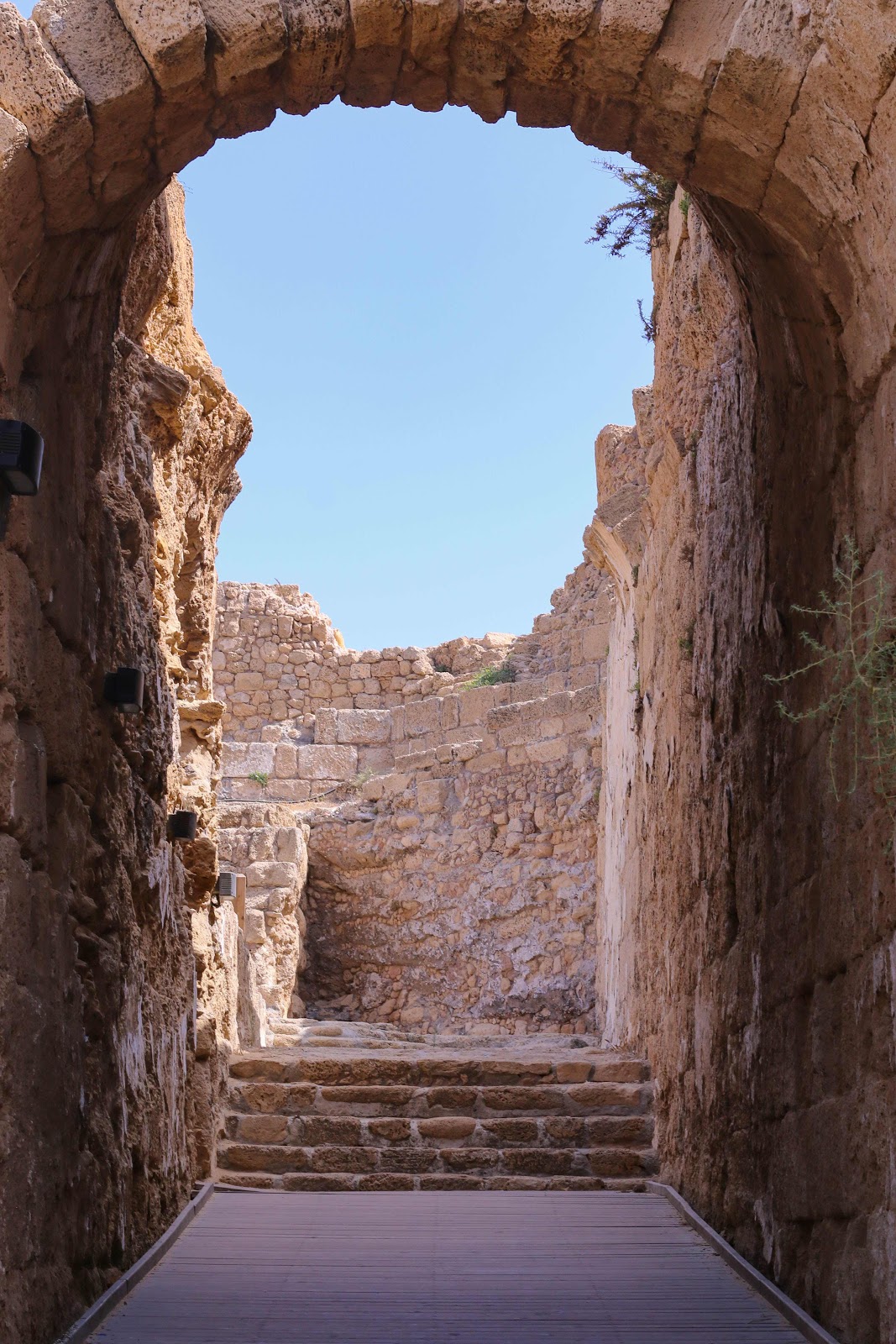
An article was published some time back that discussed whether or not erasers should be banned from classrooms. It was suggested that they create a culture of shame about error — that they are a way of lying to the world, which says, ‘I did not make a mistake. I got it right the first time.’

Whilst one spokesman thought the banning of erasers would be a harsh action, he pointed out that, ‘the observation of children’s mistakes is essential to good teaching… teachers need to observe all the attempts children make so that they can target their instruction.’

How would we feel about all our mistakes being left permanently on display? What if, in the process of making a chair I cut one leg too short — must I leave it, or should it be removed and replaced? In these circumstances, I am sure you will agree that the matter needs to be put right.
SHARE:
Blogger Template Created by pipdig