Thursday, September 24, 2026

Handling tragedy


Hasn’t the world gone crazy? It seems I am writing about this a lot recently. We recently witnessed the tragedy of four young men’s deaths in a car crash in Liverpool. Whatever the cause, the heartbreak for everyone involved is devastating. It was one of those sobering events that makes you stop and think - what if it was me? What if it was my son? Why do such things happen?


I am writing from Uganda at the moment. The other morning I met a lady with two young boys that I assumed were her grandchildren. I was right, but sadly discovered that their mother (the lady’s daughter) had died unexpectedly in November last year. I pondered - why the young lady and not someone older? Why are those little children left without their mother? I cried as I thought about it.

SHARE:

Saturday, March 29, 2025

Surviving on the Lusitania


In 1915, the Lusitania was the largest and fastest passenger in the world. It belonged to the Cunard Steamship Company and regularly sailed between Liverpool and New York, taking about a week each way.  

Edward (known as Teddy) Bond, then aged 40, was a cabin steward on the Lusitania, having worked on Cunard ships since he was a boy, and by then, he had worked his way up (via being a waiter) to the 1st class cabin section, as had his father (also Edward) before him. Teddy had married his wife Mary in 1909, and the Bonds had, a few years before 1915, moved with their family into 29 Donaldson Street, a nice street with a Welsh chapel (now Crete Gospel Hall) at one end.

SHARE:

Tuesday, October 29, 2024

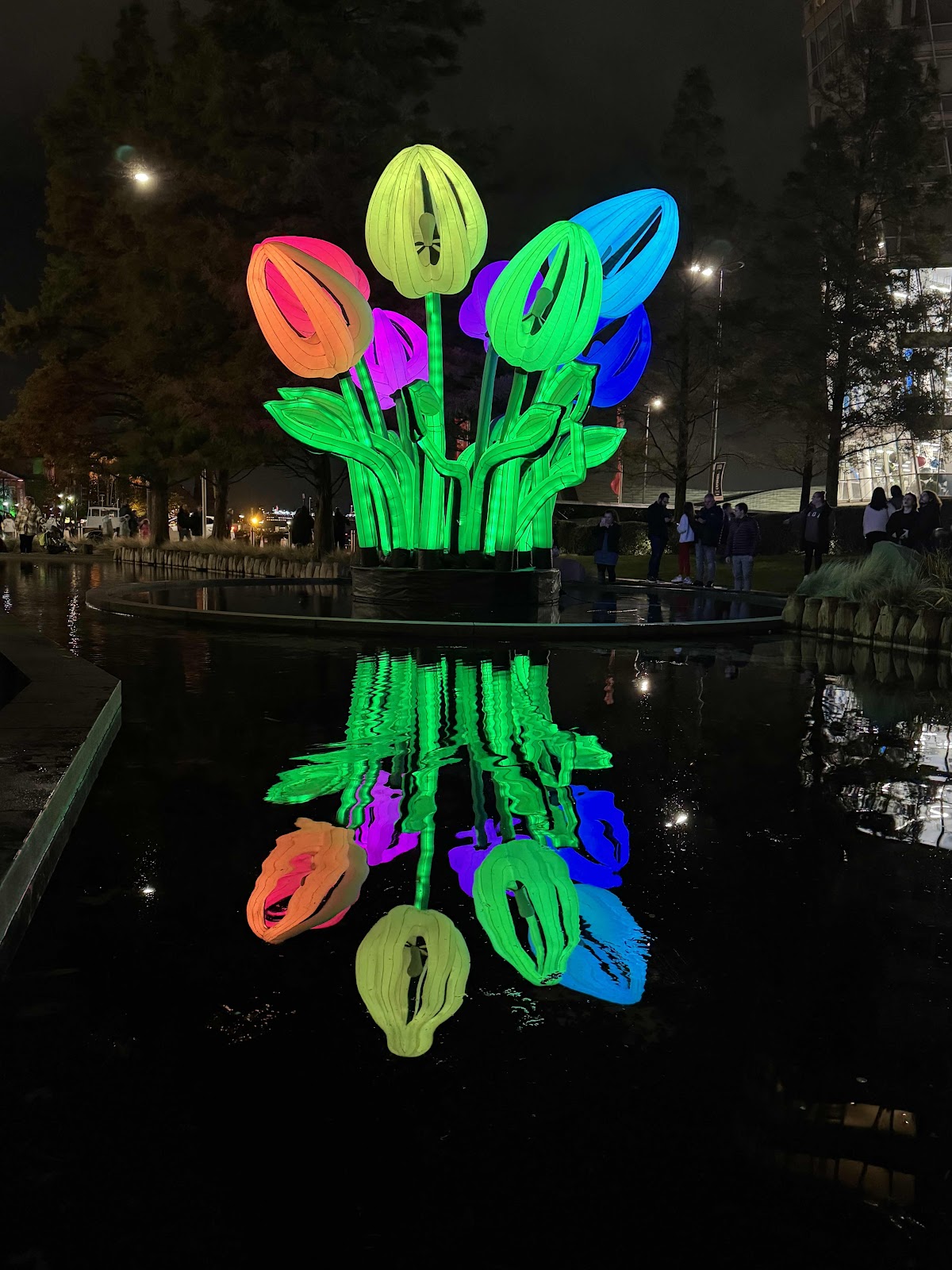
River of Light Liverpool 2024


Last night I visited the River of Lights in Liverpool with my family. It was impressive. Here are some photos. I hope you enjoy it as much as I did. 

Stephen 
SHARE:

Wednesday, May 29, 2024

Have you ever thought?


All photos courtesy of Unsplash

Imagine the unsettling sight of uncollected bins and rubbish strewn across the streets. This was the reality not long ago in Warrington, a place close to my home. The refuse workers and street cleaners were on strike, likely for valid reasons. However, this situation exposed many people to potential health hazards, underscoring the gravity of the issue. 

A few years back, I was headed to Ballymena in Northern Ireland for a week. My travel route was set to pass through Liverpool John Lennon Airport. A few days before my departure, I learned from the web that some baggage handlers were on strike. Upon reaching the airport, I was relieved to find that my flight was unaffected. However, the strike did cause significant inconvenience to many and incurred additional costs for the travelling public, as employees had to be brought in from Dublin and other places to fill in for the strikers. 

Apart from the recent action by junior doctors, I have not been affected by people striking for quite a long time. However, I remember well the miner's strikes, the fuel protests, and many other types of strikes in my sixty-two years. Strikes are a very effective, if not annoying and sometimes illegal, way of making a point. In the long run, someone suffers, and it costs money.


All photos courtesy of Unsplash

Have you ever thought about how the natural cycles and processes of the natural world are managed and maintained? I am thinking about things like the water cycle, wind and tides, the process of producing solar energy, etc. We try to harness these things, and human activity and behaviour can affect them. Still, we don't ultimately manage or control them. Have you ever stopped to think how our world is so well designed and has such efficient systems for life to exist on this planet? It's all by chance, you say; I'm not convinced!

Stop for a moment and imagine if the world stopped spinning on its axis! The consequences would be explosive. You may disagree with this view, but I believe it's not because of 'mother nature' but because of 'Father God'. The Bible teaches in Hebrews chapter 1, verse 3 that God, through the Lord Jesus, upholds all things by His spoken and powerful word. 

If, as the old song says, God holds the 'whole world in His hands', it would be worth considering letting Him keep you safe as far as your eternal destiny is concerned. To those who trust Him, He says, 'I give unto them eternal life; and they shall never perish, neither shall any man pluck them out of my hand,' The Bible - John 10:28. 

Consider the safety and protection offered by God. He has a proven track record of safe handling, saving, and protecting those who trust Him. The truth is God cares for all and has created a world that is good for all when it is not mismanaged or damaged by human behaviour. Trusting in God is the safest option.

Many years ago, in the ancient city of Athens, a Christian preacher was invited to address a meeting of Greek Philosophers. His speech is recorded in the Bible. I have added a quote from the text of his presentation as it expresses timeless truth that is still valid for a 21st-century audience. 

Acts 17:22-31 Paul Addresses the Areopagus (ESV Bible)

'What therefore you worship as unknown, this I proclaim to you. The God who made the world and everything in it, being Lord of heaven and earth, does not live in temples made by man, nor is he served by human hands, as though he needed anything, since he himself gives to all mankind life and breath and everything. And he made from one man every nation of mankind to live on all the face of the earth, having determined allotted periods and the boundaries of their dwelling place, that they should seek God, and perhaps feel their way toward him and find him. Yet he is actually not far from each one of us, for "In him we live and move and have our being"; as even some of your own poets have said, "For we are indeed his offspring.". . . the times of ignorance God overlooked, but now he commands all people everywhere to repent, because he has fixed a day on which he will judge the world in righteousness by a man whom he has appointed; and of this he has given assurance to all by raising him from the dead.'


SHARE:

Tuesday, October 10, 2023

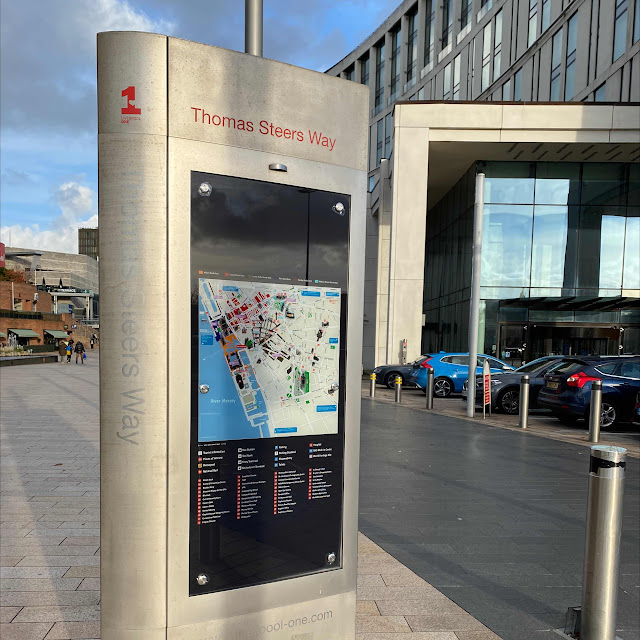
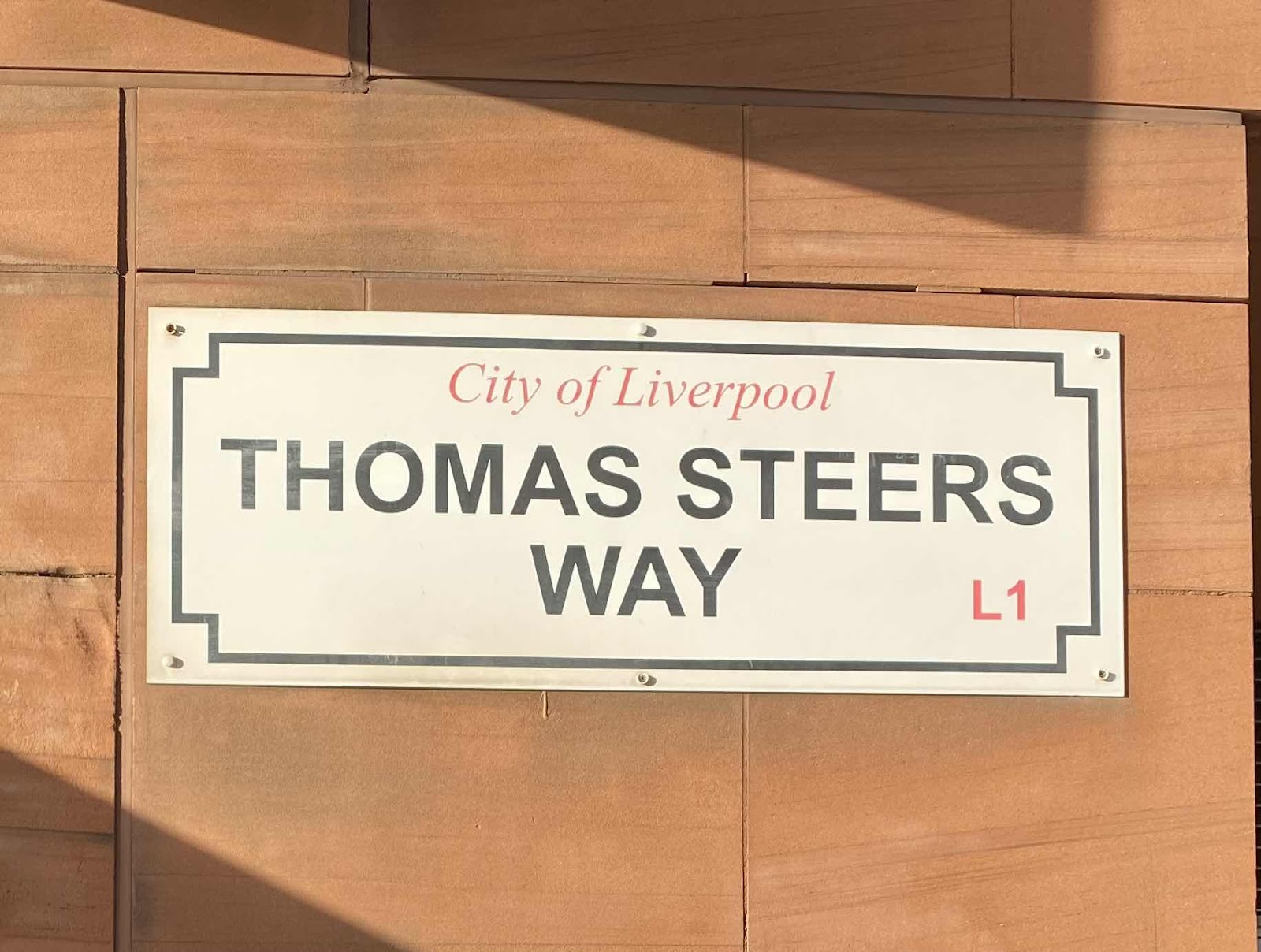
Thomas Steers of Liverpool


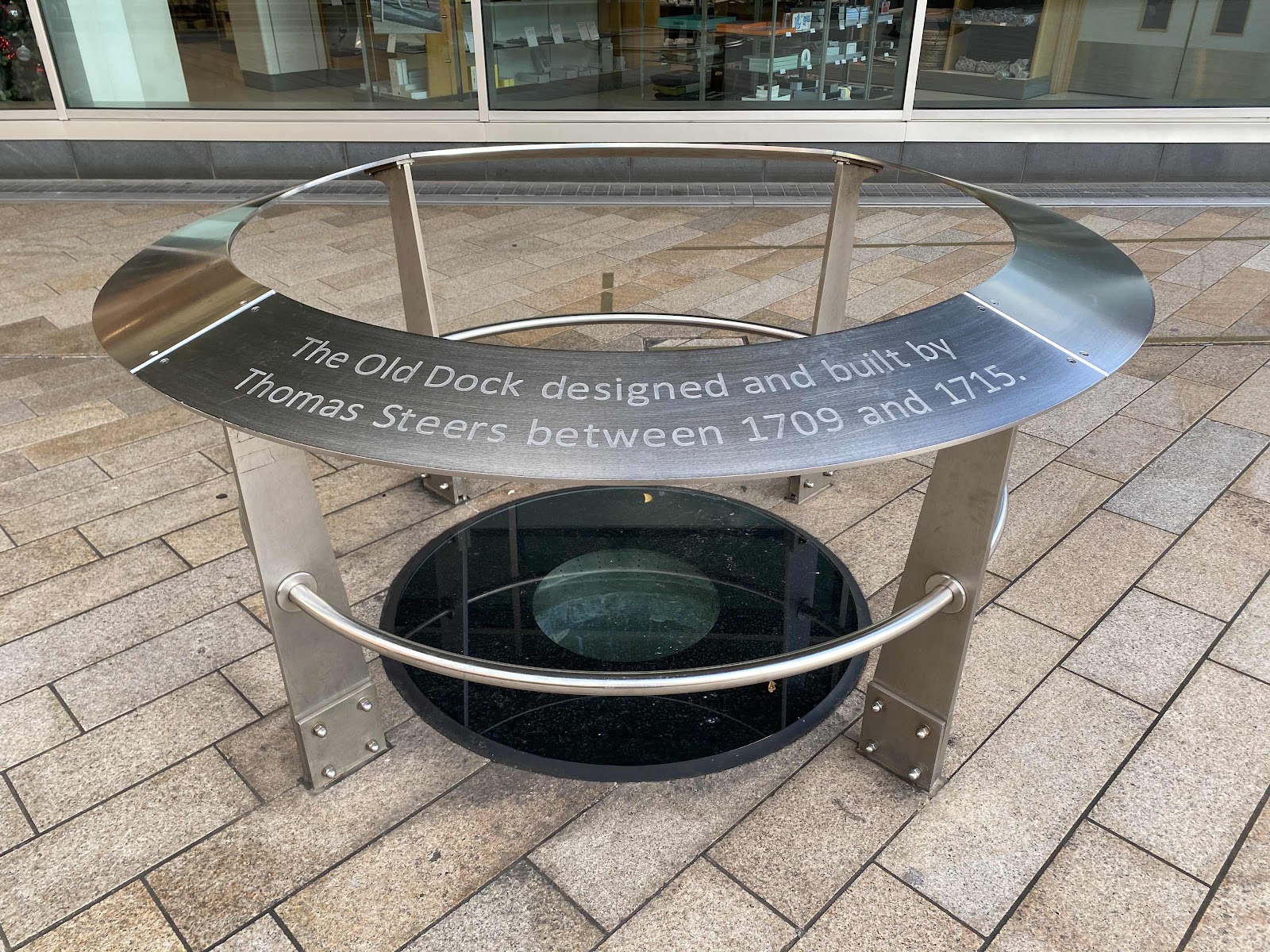
Photos courtesy of GJA Ltd

There have been some outstanding people in the history of our nation and they made such a significant contribution or cities and countryside that we continue to benefit from their design and genius. Thomas Steers is reputed to have been such a man.  

He was England's first major civil engineer and built many canals, the world's first commercial wet dock, the Old Dock at Liverpool, St. George's Church at the site of Liverpool Castle, and a theatre. He designed Salthouse Dock in Liverpool, which was completed by Henry Berry after Steers' death.

Here is a little more detail of his life which has been collated from information found on Wikipedia (this info is not guaranteed to be correct but it gives a fair view of Thomas Steer’s achievements). 

Thomas Steers was born in 1672, probably at Deptford or Rotherhithe. He is thought to have had a good education, in view of his obvious skills in mathematics, and he joined the army during his teenage years. He was part of William of Orange's4th Regiment of Foot (The King's Own), which fought at the Battle of the Boyne in 1690, and subsequently campaigned in the Low Countries against the French until the Peace of Namur was signed in 1697. He probably learned about hydraulics at this time, a skill that served him well in later years. In 1698 or 1699 he married Henrietta Maria Barber, and her father gave them a house in Queen Street, Rotherhithe.[1]

At the time, the Great Dock at Rotherhithe was being constructed, on land leased from Elizabeth Howland, which formed part of the Howland Estate. There is no record of Steers's direct involvement in the project, although he produced a survey of the completed docks in 1707, and seems to have been employed as a surveyor for the estate. A lease agreement at the time described him as a house-carpenter.[2]

In 1708, plans for a dock at Liverpool, similar to that at Rotherhithe, were formulated, and had been drawn up by George Sorocold and Henry Huss by mid-1709. Neither man accepted the offer to act as engineer for the construction of the docks. On 17 May 1710, the Town Council learned that Steers was in Liverpool, and had his own designs for the project, which involved reclaiming land from the Pool, rather than building the dock of existing land. The precise reason for Steers' arrival in Liverpool is not clear, but may well be connected to the rise to power of James Stanley, who became mayor in 1707 and Lord Lieutenant of Lancashire until 1710, and who had noticed Steers in Flanders, while commanding the 16th Regiment of Foot. Steers' design was accepted, and the construction was overseen by him, assisted by William Braddock. He also contracted for some of the excavation work, and although it was incomplete at the time, the dock opened for shipping in 1715. A tidal basin and three graving docks or dry docks were authorised by another Act of Parliament obtained in 1717, and during their construction, various alterations and extensions were made to the original dock. The works were completed in 1721. Since 1717, Steers had also acted at Dock Master, for which he was paid £50 per year, and Braddock had been the Water Bailiff. From 1724, he took over Braddock's role as well, though was no longer paid, as this post included a number of perks and fees.[3]

Concurrently with his work on the Liverpool Docks, Steers was active in other projects. He surveyed the rivers Irwell and Mersey from Bank Quay at Warrington to Manchester in 1712. An Act of Parliament authorizing the Mersey and Irwell Navigation was passed in 1721 and the work, which included eight locks in a distance of 15 miles (24 km) to overcome a rise of 52 feet (16 m), was completed about 1725. It is generally believed he was the engineer.[4] The authorising Act named him as one of the Undertakers.

He also made surveys for the Douglas Navigationwhich connected the Ribble estuary to Wigan in 1712, and was again named as an Undertaker in the Act of Parliament obtained in 1720. He built a lock and a bridge, straightened a section of the river, and started the construction of a tidal lock, but his partner William Squire, who was raising finance for the scheme in London, became involved in the South Sea Bubble, and appears to have lost most of the money he raised.[3] With the money gone, Steers moved on. The navigation was eventually completed in 1742, and carried coal from Wigan to Liverpool and onwards to Ireland by ship.[5]

His most significant navigation achievement was the Newry Canal, in Ireland, which was the first summit-level canal in the British Isles. The promoters asked him to act as engineer for the scheme in 1729, but then declined to pay him the fees he requested, and so the initial construction work was overseen by Edward Lovett Pearce. Pearce died in 1734, and his assistant Richard Castle took over the role. Steers returned to the project in 1736, when he conducted a survey of the existing work. Castle was sacked in December 1736, and Steers then supervised construction until 1741, working on a part-time basis. The work took longer than expected,[6] and the canal finally opened in the spring of 1742. The 19.4 miles (31.2 km) of canal included 13 locks, and ran from Newry, where it connected to Carlingford Lough and the sea by a narrow channel, which was made into a ship canal in the 1760s. At its northern end it ran to Portadown where it joined the Upper Bann River to reach Lough Neagh. It was built to transport coal from the Tyrone collieries to Dublin.[7]

In order to build locks with a larger fall than was possible with conventional gate paddles, Steers built two of the locks with sluices and ground paddles, which fed water into the bottom of the lock through the side walls. Water supply for the summit level was taken from local streams, supplemented by water from Lough Shark, which was used as a reservoir. As a whole, the work was not well executed, and the innovative locks had to be rebuilt soon after 1750.[6]


Besides his work on docks and canals, Steers was involved with a wide range of other projects. Even the Mersey and Irwell Navigation and the Douglas Navigation were promoted not just to make carriage of existing trade easier, but to generate new trade which would contribute to the prosperity of the region. Jointly with Sir Cleave Moore and Sir Thomas Johnson, he promoted the Liverpool Waterworks in 1720. He set up a smithy making anchors near the Liverpool Docks, and was a partner in the Dove, a ship which traded between Liverpool and the West Indies.

He appears to have been a keen amateur architect (before that term was in popular parlance) and as well as the work on Liverpool Old Dock, executed alongside chief mason Edward Litherland, is paid in the accounts of The Blue Coat School (1715) once again with Litherland, "a new Street, called Chorley Street or Squire's Garden" (1720), St. George's Church (1725) (Litherland cited as mason) and what would become Salt House Dock once again winning the contract along regular collaborator Litherland. Their working relationship ended with Litherland's death in 1739. His best known architectural work was that of "Seel's House" on Hanover Street, Liverpool which would later become a bank before making way for the Liverpool One Tesco supermarket. It is highly likely that he designed a number of other buildings in Liverpool, no longer extant, including buildings on Paradise Street.

In 1725 he became a commissioner for the turnpike road from Prescot to Liverpool, and drew up plans for St George's Church on the site of the Liverpool Castle. He subsequently was responsible for the construction of its foundations and steeple. He built houses for poor and destitute seamen in 1739, and opened the Old Ropery Theatre in the following year.[8]

Steers became a Freeman of the town of Liverpool in 1713, and served on the town council in 1717. In 1719 and 1722, he was a Town Bailiff, became mayor of Liverpool from 1739 to 1740, and was an Out-burgess in Wigan in 1746. He was responsible for the fortification of Liverpool during the Jacobite rising of 1745. 

Steers' first marriage to Henrietta Maria ended in 1717 with her death. Of their seven children, four died in childhood, while the other three are thought to have become seamen, and all had died by 1732. In 1719 he married Ann Tibington, who came from Rotherhithe and was the widow of a seaman. She had a son called John, and they had four children of their own, two of which died in childhood. He died in 1750, and was buried in the grounds of St Peter's Church. His only surviving son, Spencer, carried on his anchor making business after his death.[9]

There was also a Thomas Steers, lime burner of Greenwich (probably the owner and/or digger of "Jack Cade's Cavern" and of a nearby sand mine) who was born about this time and in the right area, but who was probably not the same person. Other Steers were involved in pottery. This hints at an extended Steers family with interests in kilns and building mortar.

Despite his considerable contribution to civil engineering, his death went almost unnoticed, although the civil engineer John Smeaton, writing to the Calder and Hebble Navigation in 1757, noted that Steers was an esteemed man of character and ability in his profession. He built the first successful commercial dock in the world, and the United Kingdom's first summit level canal. He trained his assistants well, as several went on to have illustrious careers of their own. Above all, he understood his work in its wider social context, being active in the politics and trade of Liverpool, and understanding the need for the town to be well-connected to its hinterland. His work paved the way for Liverpool to become one of the world's greatest ports, and was a contributory factor in the industrial revolution which began shortly after his death.[10]

I find the history and story of people’s lives very interesting. The final comment that ‘his death went unnoticed’ is quite sobering. It is possible to live your life well, to do great things, and to make a significant impact on your world and yet to die unrecognized and unnoticed. I must clarify that this is ‘unnoticed’ by the world for the Bible teaches that you will never die unnoticed by God. 

From the moment of your birth to the date of your death your life is significant. There are numerous statements and verses in the Bible that make this clear. 

Starting at the beginning of the Bible we read that humans were made in the image of God - Genesis 1. 26.

In the middle of the Bible, David the great poet king states that God knew him individually before he was born (Psalm 22. 9,10) and was aware of the highs and lows of his life (Psalm 139).

In the New Testament, there are also men who we learn God had involvement in their lives from before birth (John the Baptist, Luke 1. 5-25, Paul, Gal. 1. 15). The interesting fact about Saul of Tarsus who eventually became a Christian (and became known as Paul the Apostle) is that he was anti-Jesus and anti-Christianity until God personally intervened in his life (Acts 9, 22, 26).

In light of these facts, I suggest that we need to focus on timeless truths and do things with our lives that will not just outlive us but be of eternal value and significance.

This life is temporary and so are the things that you can see around you but there are unseen things that are eternal (2 Cor 4. 18).

Do you have eternal life?

Are you living merely for the ‘here and now’ or for what is timeless and eternal?

Finally, a verse from the Bible that explains how humans receive eternal life from God, their creator.

“For God so loved the world, that He gave His only begotten Son, that whoever believes in Him shall not perish, but have eternal life,” John 3:16 (The Bible - NASB) 


SHARE:

Sunday, September 20, 2020

What does true love look like?


Love is a wonderful aspect of human life. Someone once wrote that ‘love makes the world go round’ and the Beatles insisted that ‘all we need is love’. There are many kinds of love and they reveal the caring side of human nature. The love between spouses is close and intimate, the love between parents and children is very special and the love and care which friends show towards each other is to be treasured. Indeed the Bible says that ‘if I have no love, this does me no good’ and the greatest love was shown by God.

SHARE:

Friday, January 25, 2019

Why you will need the Bible in 2019


The Bible is the world’s best selling book. It doesn’t need any one to defend it. It is the word of God and as such is powerful and effective without human intervention. The bible claims to be able to ‘discern the thoughts and intents  of the heart,’ Hebrews 4:12. It also stated that it is ‘able to make you wise unto salvation through faith which is in Christ Jesus,’ 2 Timothy 3:15. 

Here are some comments famous people have made about the Bible:

                                                              John Quincy Adams
"So great is my veneration for the BIBLE that the earlier my children begin to read it, the more confident will be my hope that they will prove useful citizens to their country and respectable members of society"
SHARE:

Saturday, May 26, 2018

#LFC v Real Madrid - Champions League Final 26th May 2018


When I was a kid people used to sing a song called "Football Crazy". I cannot remember who sang it or who made it famous but the words have stuck in my mind. 

Tonight, supporters of Liverpool Football Club, who are literally football crazy, are desperate for Liverpool to win the Champions League Title. As a result of their victory in the 2005 UEFA Champions League Final, Liverpool won the European Champion Clubs' Cup trophy outright, and were awarded a multiple winner badge. Liverpool's total of three UEFA Cup wins has been bettered only by Sevilla, who have won the competition five times. Real Madrid also have an incredible record as have many Spanish teams.
SHARE:

Friday, November 25, 2016

You'll never walk alone - LFC Anthem


Liverpool Football Club Anthem

The words 'You'll never walk alone' are well known to every Liverpool fan. Those of us who live in the city see the symbol of Liverpool Football Club so often that we probably often forget that this is the motto.

‘You’ll never walk alone - when you walk through a storm hold your head up high’
We all face storms in life. No one said that life would be smooth and easy. But why is it like this? The Bible states that it is because of evil and sin. ‘By one man sin entered into the world and death by sin so death passed upon all men for that all have sinned’.(1)
SHARE:

Wednesday, September 28, 2016

Labour Party Conference - Liverpool


This week the Labour Party has it's annual conference in Liverpool. All the normal debates and discussions will take place, people  will meet and greet and rub shoulders with the great and the good. The intention is to create policies that will change our nation if the party gets into power. The motivation of the masses is a major part of the exercise. How do you get people to believe in you and your policies. It's a problem that democracy has grappled with since its inception. 
SHARE:

Tuesday, May 31, 2016

Two reasons why Jesus lived and died! - 1 John 3:4-10


1 John 3:4-10

4 Whosoever committeth sin transgresseth also the law: for sin is the transgression of the law.
5 And ye know that he was manifested to take away our sins; and in him is no sin.
6 Whosoever abideth in him sinneth not: whosoever sinneth hath not seen him, neither known him.
7 Little children, let no man deceive you: he that doeth righteousness is righteous, even as he is righteous.
8 He that committeth sin is of the devil; for the devil sinneth from the beginning. For this purpose the Son of God was manifested, that he might destroy the works of the devil.
9 Whosoever is born of God doth not commit sin; for his seed remaineth in him: and he cannot sin, because he is born of God.
10 In this the children of God are manifest, and the children of the devil: whosoever doeth not righteousness is not of God, neither he that loveth not his brother.
And so.......
The bible verses we have posted today tell us two major reasons why the Lord Jesus Christ came into this world:
1. To take away our sins (writing to people who have trusted Christ for salvation)
2. To destroy the works of the devil.
The coming of Christ was for two very specific reasons - to saved 'people from their sins' and to reverse the works of the devil. All other 'side effects' of the presence of the Lord Jesus in the world are additional benefits but not the main reason for him being here. 
As is always the case with God the side effects in themselves are quite outstanding. The love of God was seen in the life of Christ, he was a great moral example, he showed us what it was to like to live a sinless life, he displayed compassion and care like no one else who ever lived and so the list goes on. BUT this was not the central reason for his being in the world. 
The central reason is expressed in the following verses:
Christ Jesus came into the world to save sinners - 1 Timothy 1:15
The Father sent the Son to be the Saviour of the world - 1 John 4:14
I am come that they might have life - John 10:10
How is it possible:
Only because of one thing - the death of Jesus on the cross. Hebrews 2:14 tells me that the Son of God took a body (flesh and blood) 'that through death he might destroy him that had the power of death, that is, the devil and deliver them who fear of death were all their lifetime subject to bondage'. It is the death of Jesus on the cross that paid the price and laid the foundation for salvation. His death was the act that meant that the devil is a condemned foe who will ultimately face eternal judgement in the Lake of Fire. His death made it possible that we could be forgiven and our sins taken away.
So what do I need to do?
The response to that question is given in many places in the New Testament:
Believe on the Lord Jesus Christ - Acts 16:31
Repent and be converted - Acts 3:19
Call upon the name of the Lord - Romans 10:13
Will you come, call, believe and be saved?
To access podcasts and videos explaining the good news of salvation through faith in Jesus Christ visit www.seekthetruth.org.uk
this site will give you access to Bible Teaching Audio's and Video's as well.
SHARE:
Blogger Template Created by pipdig